Recent Posts
Earth Rod Manufacturers in India: A Buyer's Guide to Types, Sizes and Quality
An earth rod looks simple: a length of metal in the ground. But the rod you choose decides whether your earthing system passes its resistance test, how long it lasts and how well it protects people and equipment when a fault or lightning strike happens.
India has many earth rod manufacturers, and quality varies widely. This guide explains the main types of earth rods, the sizes used in India, how rods are installed and what to check before you buy. For the basics of why earthing matters at all, read what earthing is and why it is important.
What an Earth Rod Does
An earth rod, also called a grounding rod or earthing electrode, connects your electrical system to the general mass of the earth. When insulation fails or lightning strikes, current flows through the earthing conductor into the rod and spreads into the soil. The lower the resistance of this path, the faster and more safely the energy dissipates, and the more reliably protective devices such as circuit breakers trip.
Types of Earth Rods Made in India
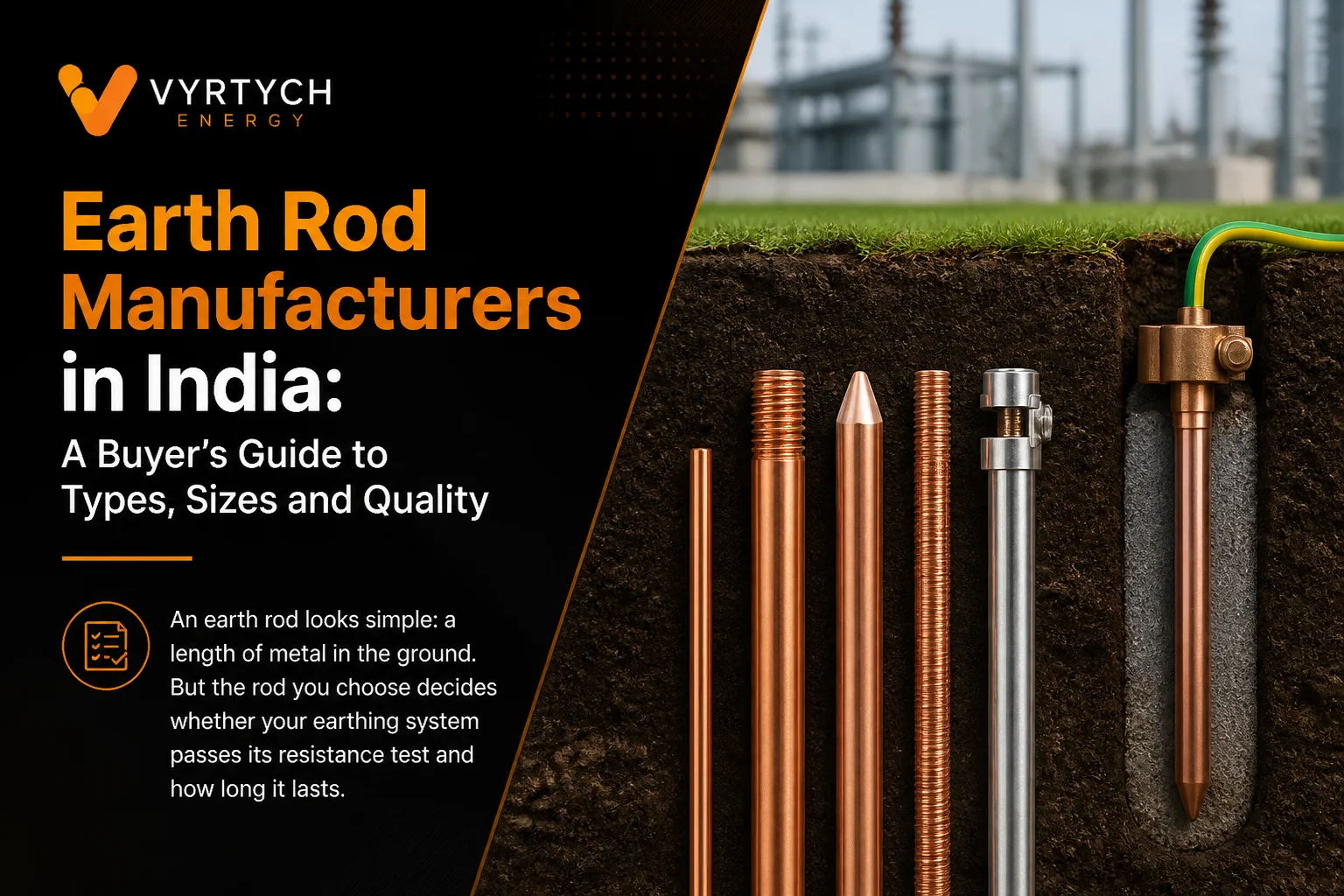
Copper-bonded earth rods
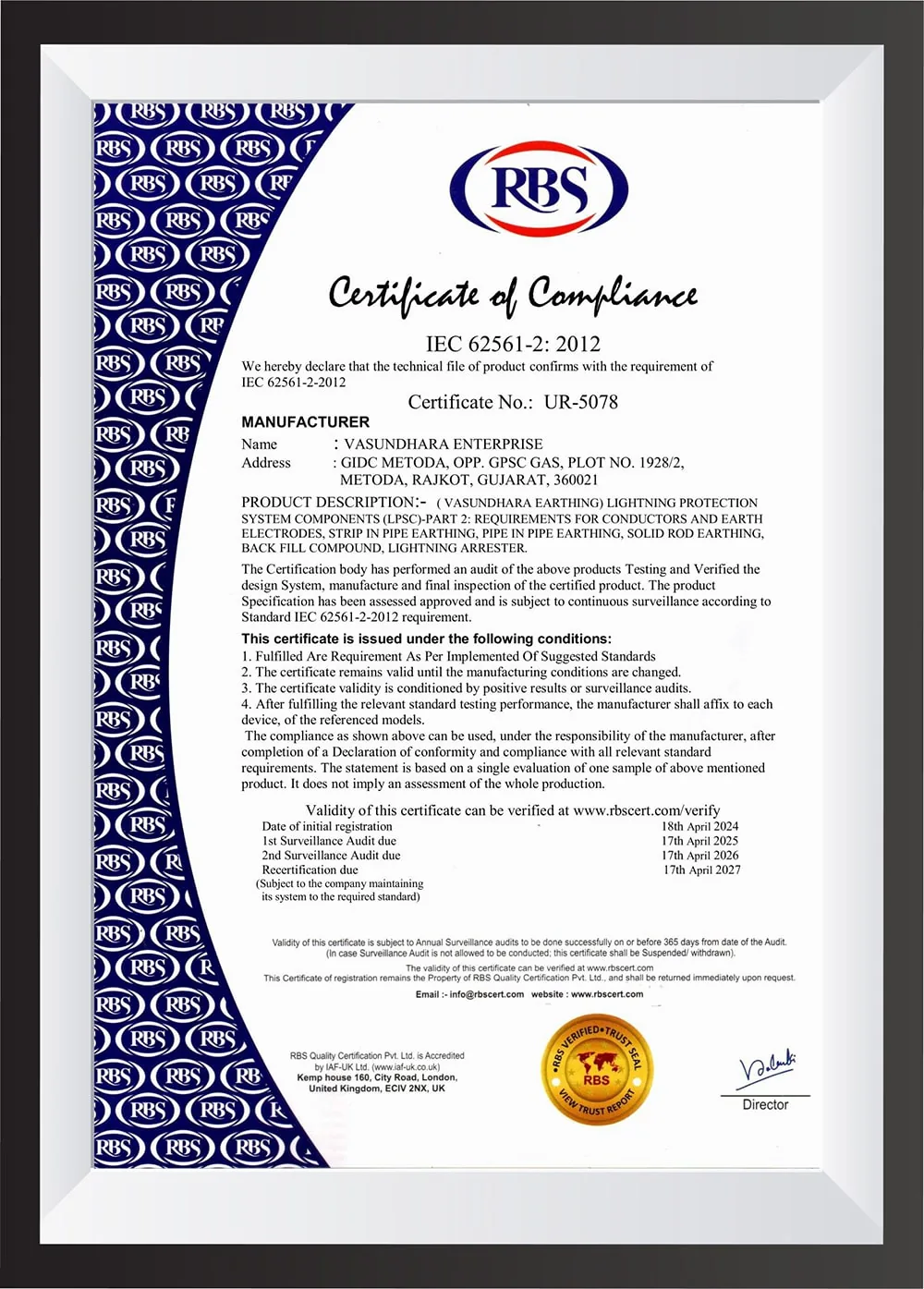
A steel core is permanently bonded with a layer of copper. The steel gives strength for driving into the ground, while the copper provides conductivity and corrosion resistance. This is the most popular choice for industrial, commercial and solar projects. Coating thickness is the key quality marker: IEC 62561-2 and UL 467 both set minimum copper thicknesses, so ask the manufacturer to confirm it. Our detailed guide on how to choose copper bonded earth rod manufacturers covers this in depth.
Solid copper earth rods
Solid copper offers the best conductivity and corrosion resistance. It is used where reliability is critical, such as substations and data centres, but it costs more and is softer, so it is usually installed in bored holes rather than driven.
Galvanized iron (GI) earth rods
GI rods are steel coated with zinc. They are the most economical option and work well for homes and small buildings where soil is not highly corrosive.
Chemical earth rods
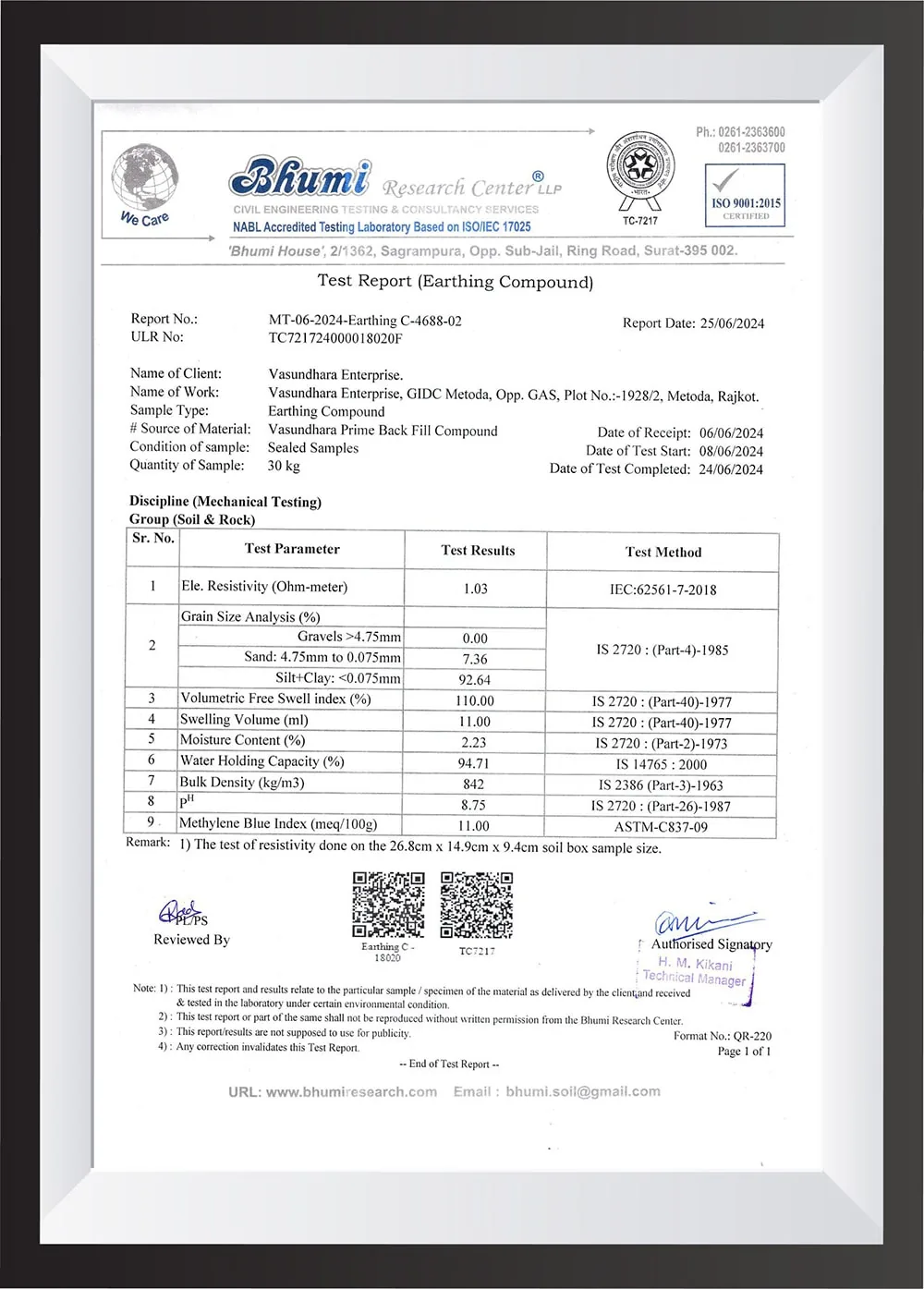
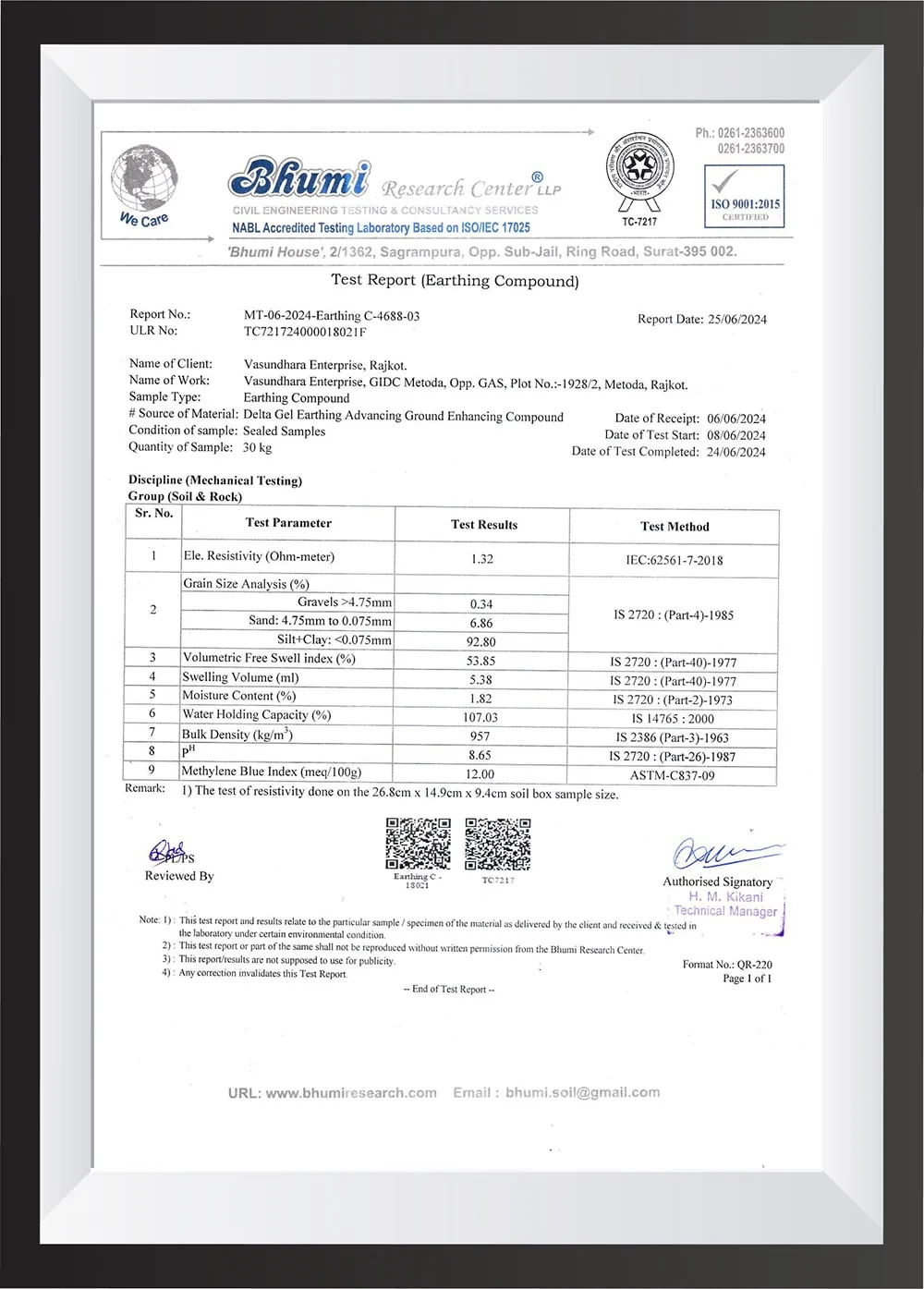
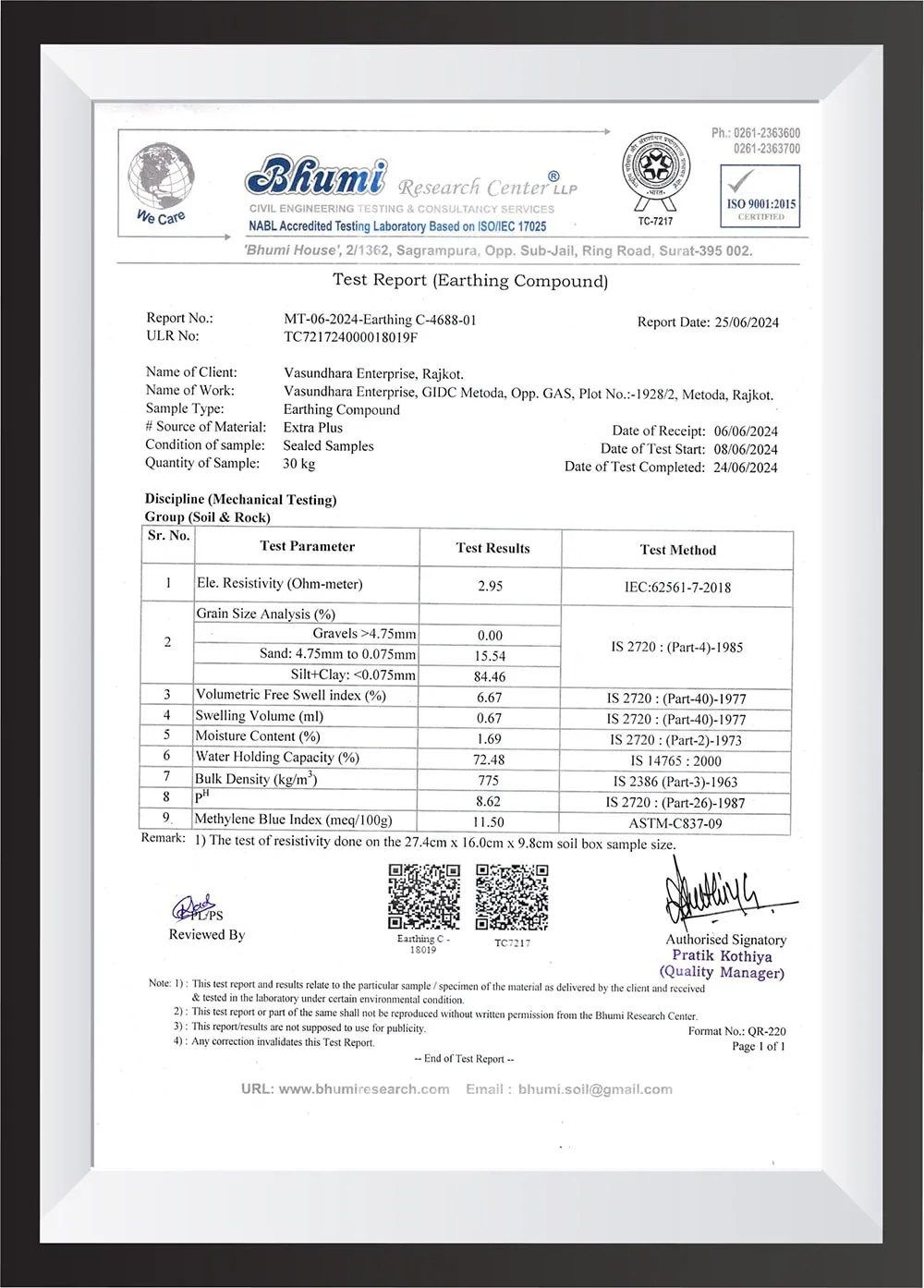
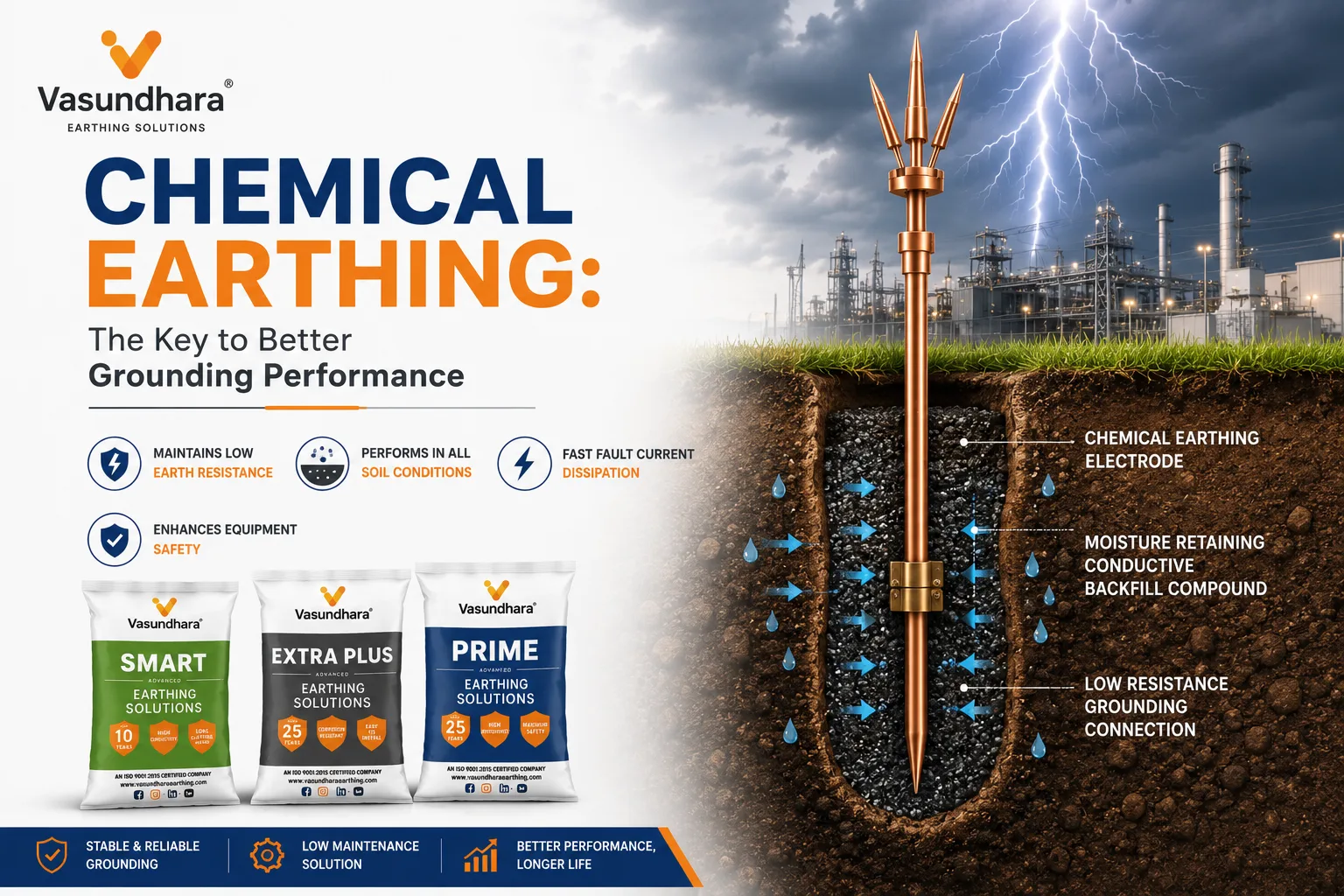
Any of the above can be installed as a chemical earth rod, surrounded by a conductive earthing compound. The compound holds moisture and lowers resistance, making chemical rods the preferred choice in dry, sandy or rocky ground. Learn more in our gel earthing system explainer.
Earth Rod vs Earth Pipe vs Earth Plate
| Electrode | Advantages | Limitations |
|---|---|---|
| Earth rod | Reaches deeper soil, easy to extend, compact footprint | Smaller surface area than a pipe |
| Earth pipe | Larger surface area, can hold compound inside | Heavier to handle |
| Earth plate | Traditional, familiar method | Needs a large pit, dries out, needs regular maintenance |
Most modern Indian installations have moved from plates to rods and pipes. See gel earthing electrode vs copper plate earthing for a full comparison.
Earth Rod Sizes and Installation Depth
Chemical earth rods in India commonly range from 25 to 50 mm in diameter and 2 to 3 metres in length. Longer rods reach deeper, moister soil, which usually lowers resistance. Where one rod cannot meet the target, engineers either couple rods together to go deeper or install several rods in parallel, spaced apart so their resistance areas do not overlap too much. The correct size and number depend on soil resistivity, fault current and the target resistance in your design, so always start with a soil test.
What to Check Before Choosing an Earth Rod Manufacturer
- Material and coating data: The manufacturer should state the core material and coating thickness in writing.
- Standards compliance: Look for alignment with IS 3043 and relevant IEC, BS or UL requirements.
- Complete system supply: Rods perform best with matched compound, earth pit chambers and clamps and accessories.
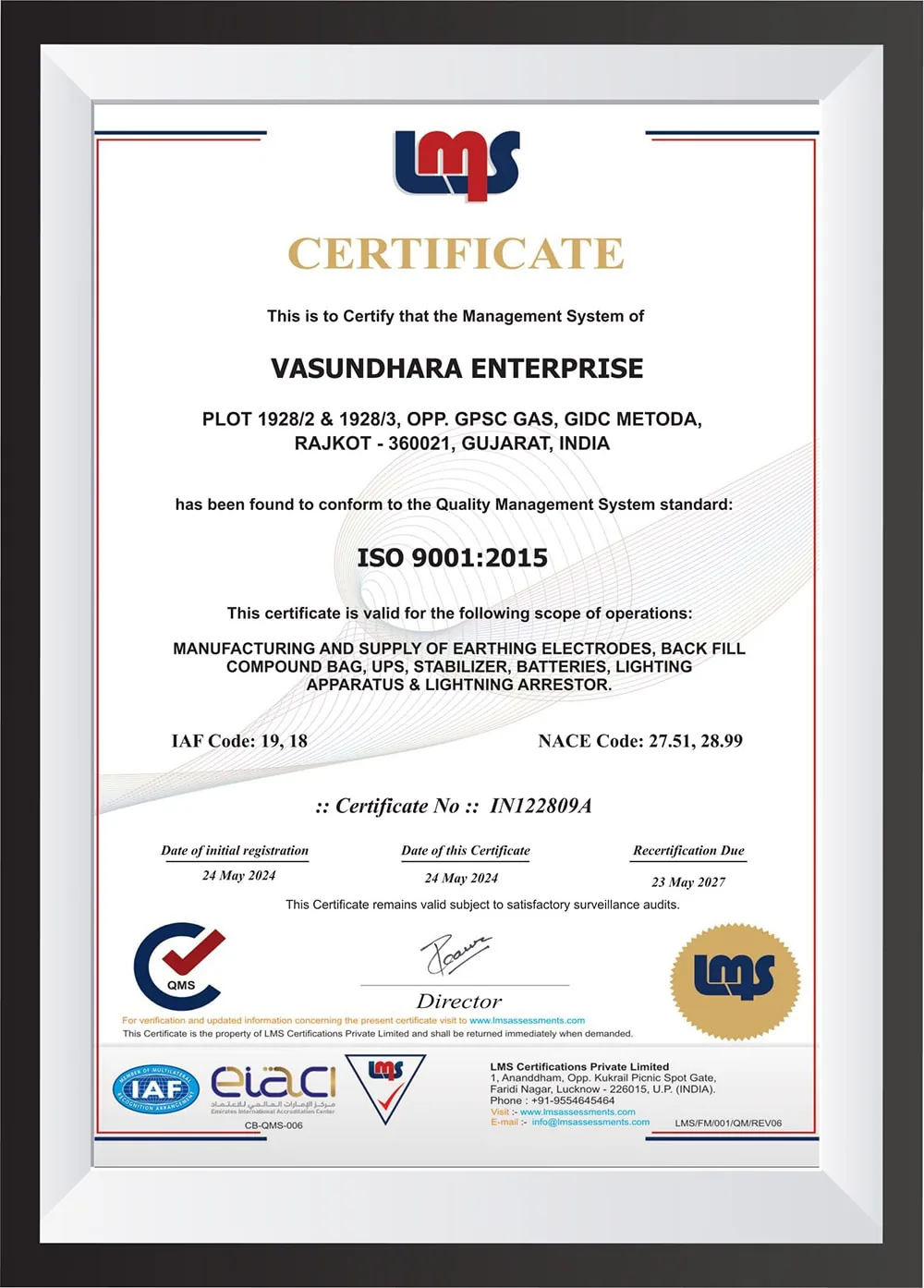
- In-house manufacturing: A true manufacturer controls quality, while a reseller depends on someone else's process.
- Technical support: Good manufacturers help you size the system and provide installation guidance.
- Delivery reach: Confirm that the manufacturer can deliver to your site on schedule.
Vasundhara Earthing: Earth Rod Manufacturer in Rajkot, Gujarat
Vasundhara Earthing manufactures chemical earthing rods in copper, copper-bonded steel and GI at our factory in Metoda GIDC, Rajkot. Our rods are designed for resistance below 1 ohm in suitable conditions and are inspected before dispatch. We supply across India through dealers and distributors in cities including Delhi, Noida, Ahmedabad, Chennai, Hyderabad, Bangalore and Kolkata.
We also manufacture the rest of the system: earthing pipes in five series, backfill compound, pit chambers and lightning arresters. Browse our full product range or read about us.
Related Reading
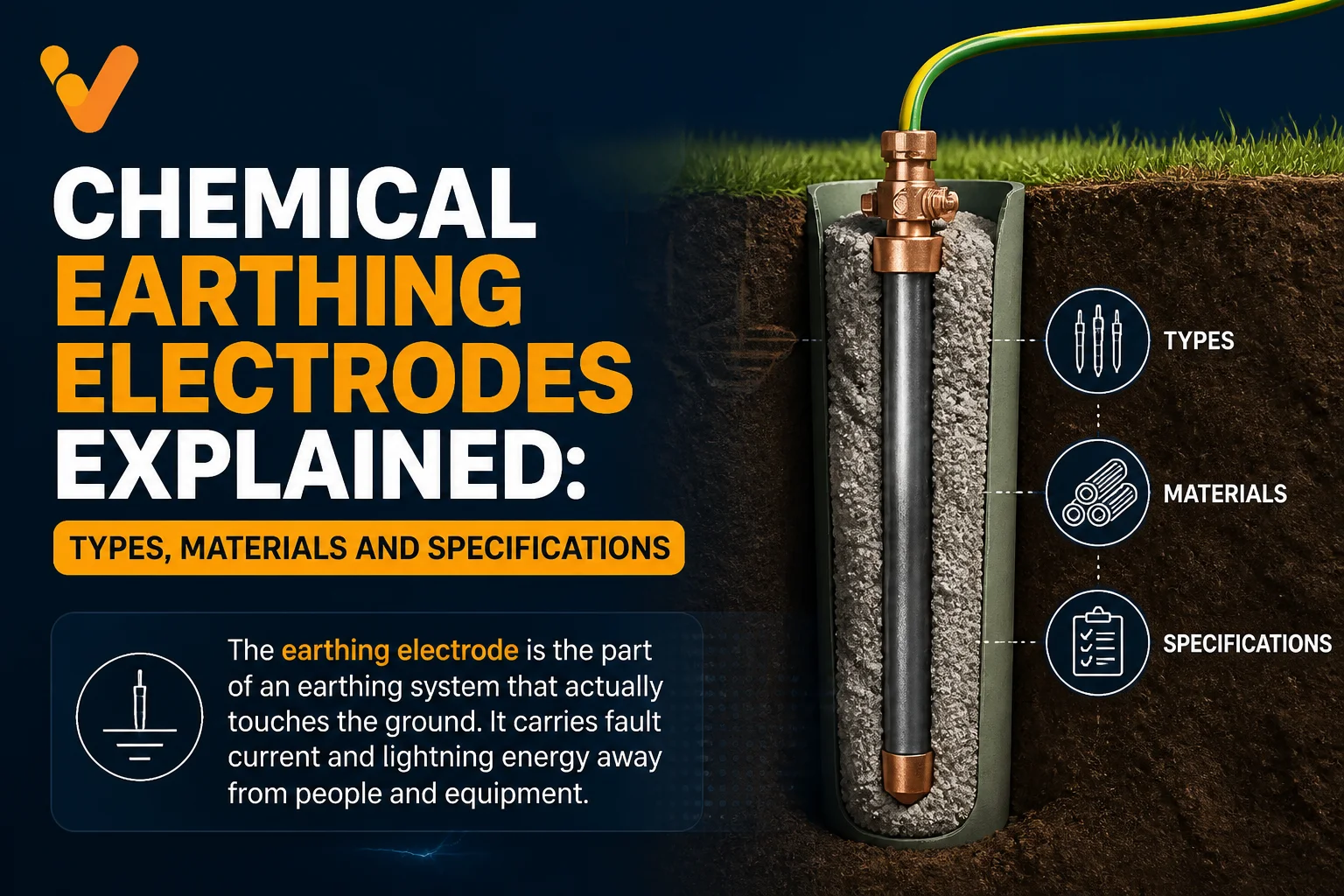
- Chemical earthing electrodes: types, materials and specifications
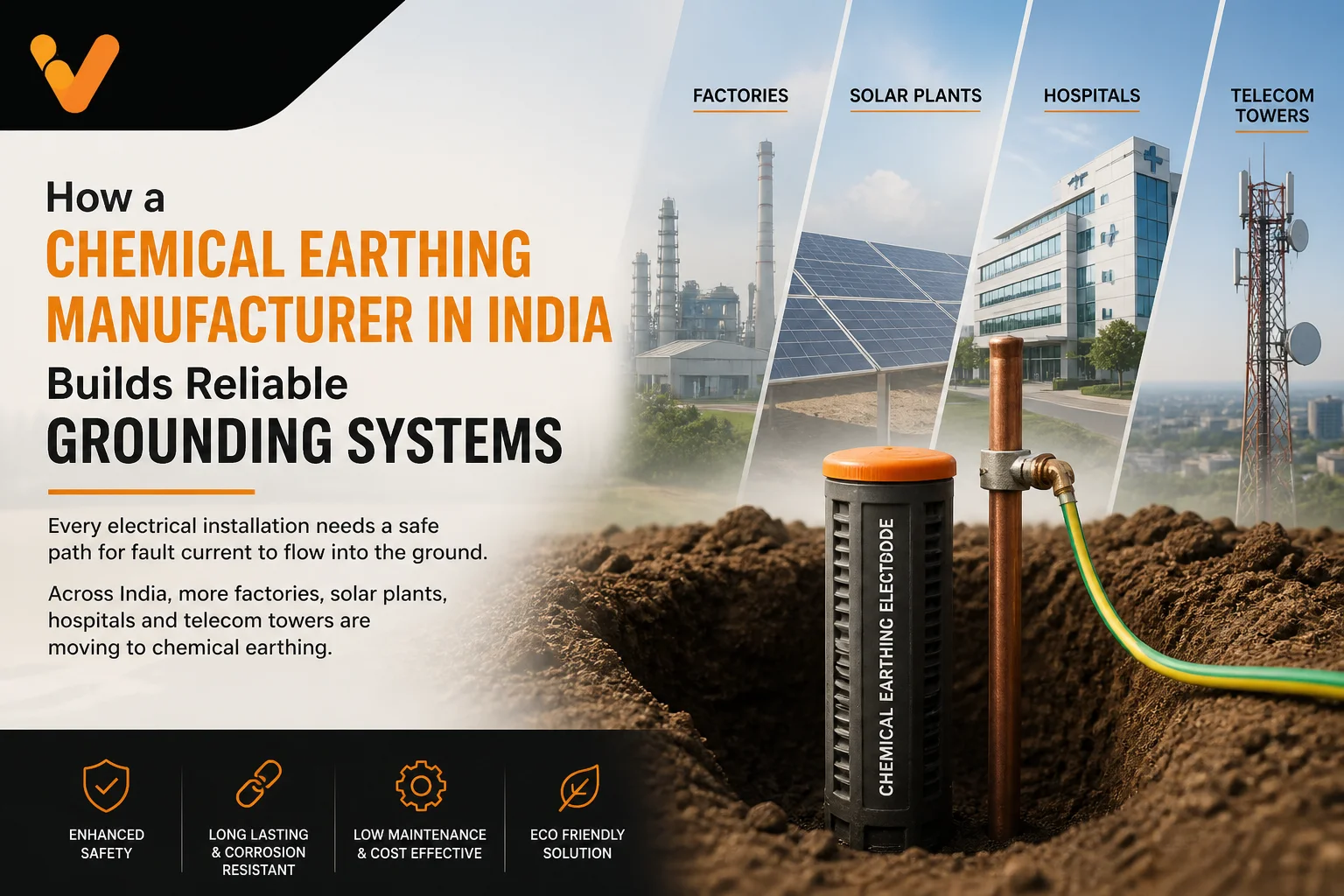
- How a chemical earthing manufacturer in India builds reliable systems
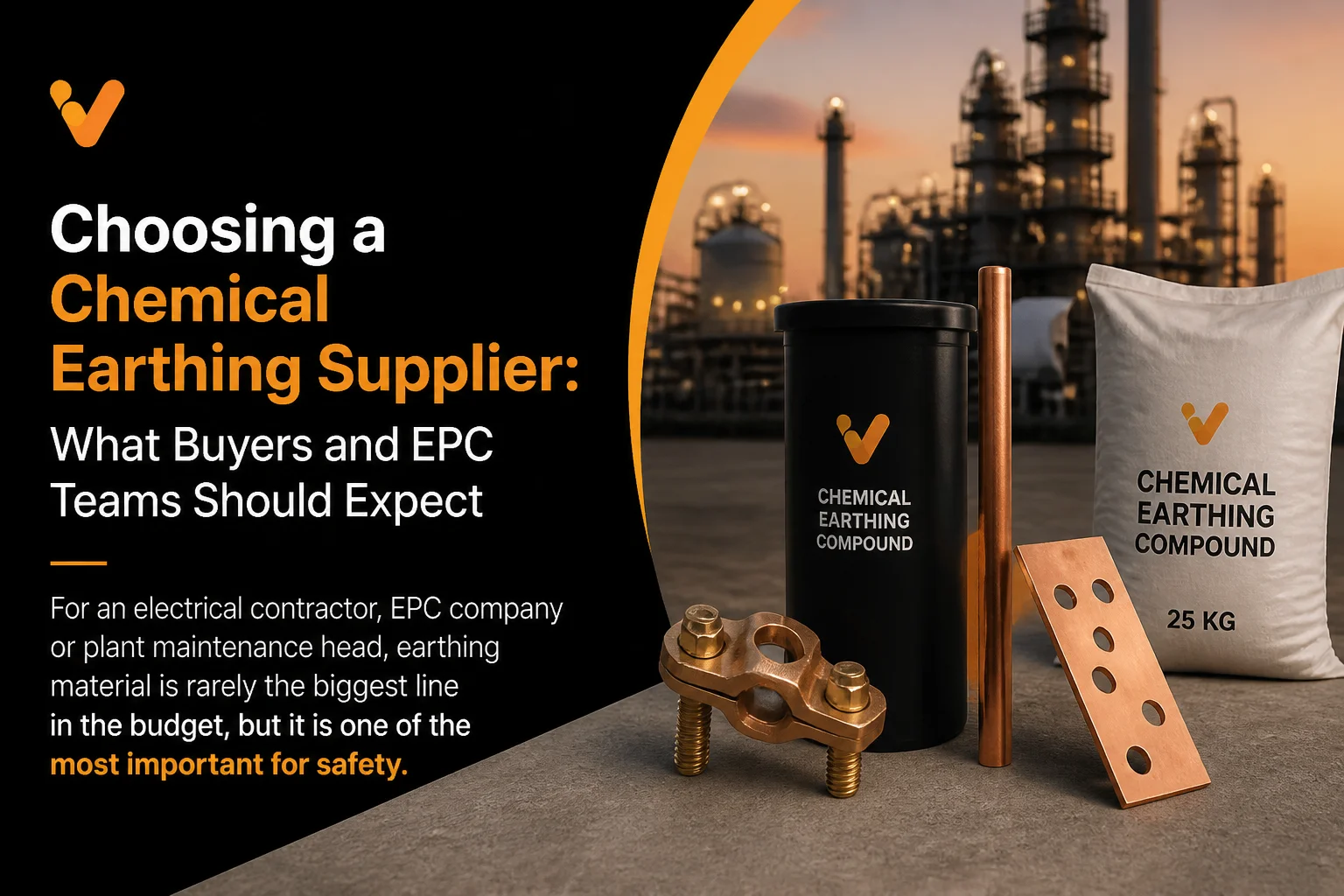
- What to expect from a chemical earthing supplier
Frequently Asked Questions
What is an earth rod used for?
An earth rod is a metal electrode driven or placed into the ground to provide a low-resistance path for fault current and lightning energy. It protects people from electric shock and protects equipment from damage.
Which type of earth rod is best?
Copper-bonded earth rods are the most widely used because they combine copper's conductivity and corrosion resistance with the strength of a steel core at a reasonable price. Solid copper suits critical sites, and GI suits budget installations in less corrosive soil.
What is the standard size of an earth rod in India?
Chemical earth rods commonly range from 25 to 50 mm in diameter and 2 to 3 metres in length. The right size depends on soil resistivity, the target resistance and the fault current the system must carry.
How deep should an earth rod be installed?
Earth rods are usually installed to their full length of 2 to 3 metres. In high-resistivity soil, longer or coupled rods and multiple rods in parallel help reach moister ground and lower resistance. Follow your design and the applicable code.
What is the difference between an earth rod and a chemical earth rod?
A plain earth rod relies only on contact with the surrounding soil. A chemical earth rod is installed with a conductive backfill compound that holds moisture and reduces resistance, giving more stable performance in dry or rocky ground.
Get a Quote for Earth Rods
Tell us your rod material, size, quantity and delivery location, and we will send a quotation. Contact Vasundhara Earthing or call +91 90330 04276.