Recent Posts

Chemical Earthing: The Key to Better Grounding Performance
Every safe electrical installation relies on one fundamental element: a low-resistance path to the ground. When a fault current or lightning strike hits a facility, the grounding system is what shields personnel, prevents equipment blowouts, and keeps operations stable.
The problem is that traditional grounding methods don't always hold up over time. Soil isn't static. Seasonal dry spells, shifting moisture levels, and poor soil resistivity can cause ground resistance to spike, leaving your entire facility exposed to electrical hazards when you need protection most.
That is why chemical earthing has become the modern standard for tough site conditions. By surrounding the grounding electrode with a moisture-retaining, highly conductive compound, chemical earthing maintains a stable, low-resistance connection regardless of what the weather is doing above ground.
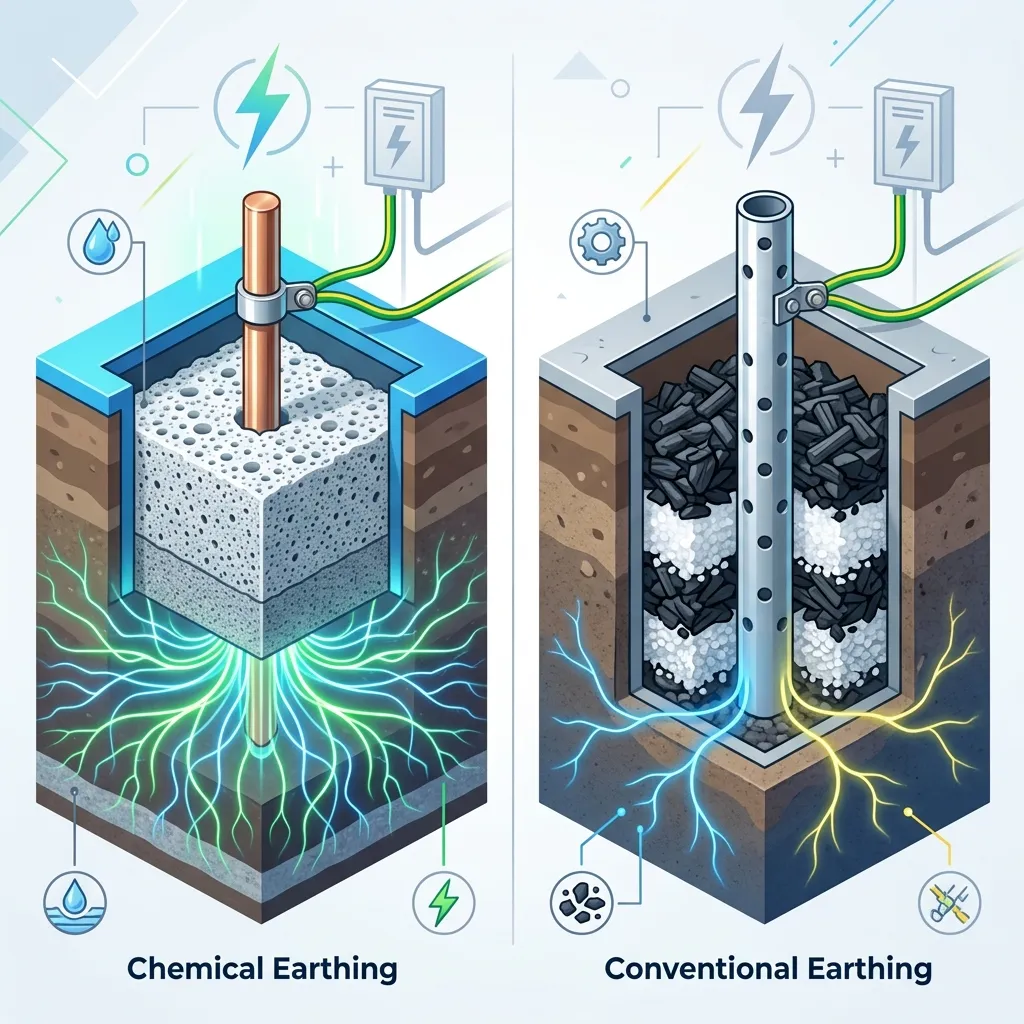
Here is a look at how the chemical earthing system actually works, why it offers better grounding performance as compared to conventional pipe and plate earthing, and where it makes the biggest difference on site.
Why Conventional Earthing Doesn't Always Deliver Reliable Performance
Standard pipe and plate electrodes have a major flaw: their performance changes with the weather. Because basic earthing relies entirely on surrounding soil moisture to conduct electricity, a summer dry spell or a cold snap can cause earth resistance readings to skyrocket overnight.
If your site sits on rocky terrain, gravel, or sandy soil, getting conventional electrodes to hit target resistance levels in the first place is notoriously tough. As the dirt dries out and shrinks away from the metal pipe, the physical connection breaks down. When a heavy fault current hits that high-resistance path, the energy can't escape into the ground fast enough, endangering crews and back-feeding high voltage into your control panels.
On top of that, raw steel and basic copper pipes corrode quickly underground. This might negatively impact the grounding performance. Acids in the soil eat away at the metal, forcing maintenance teams into an endless loop of digging up pits, pouring in salt and charcoal, and re-testing connections just to stay in compliance.
What Is Chemical Earthing?
At its core, chemical earthing is just a smarter way to bridge the physical gap between a grounding rod and the surrounding soil.
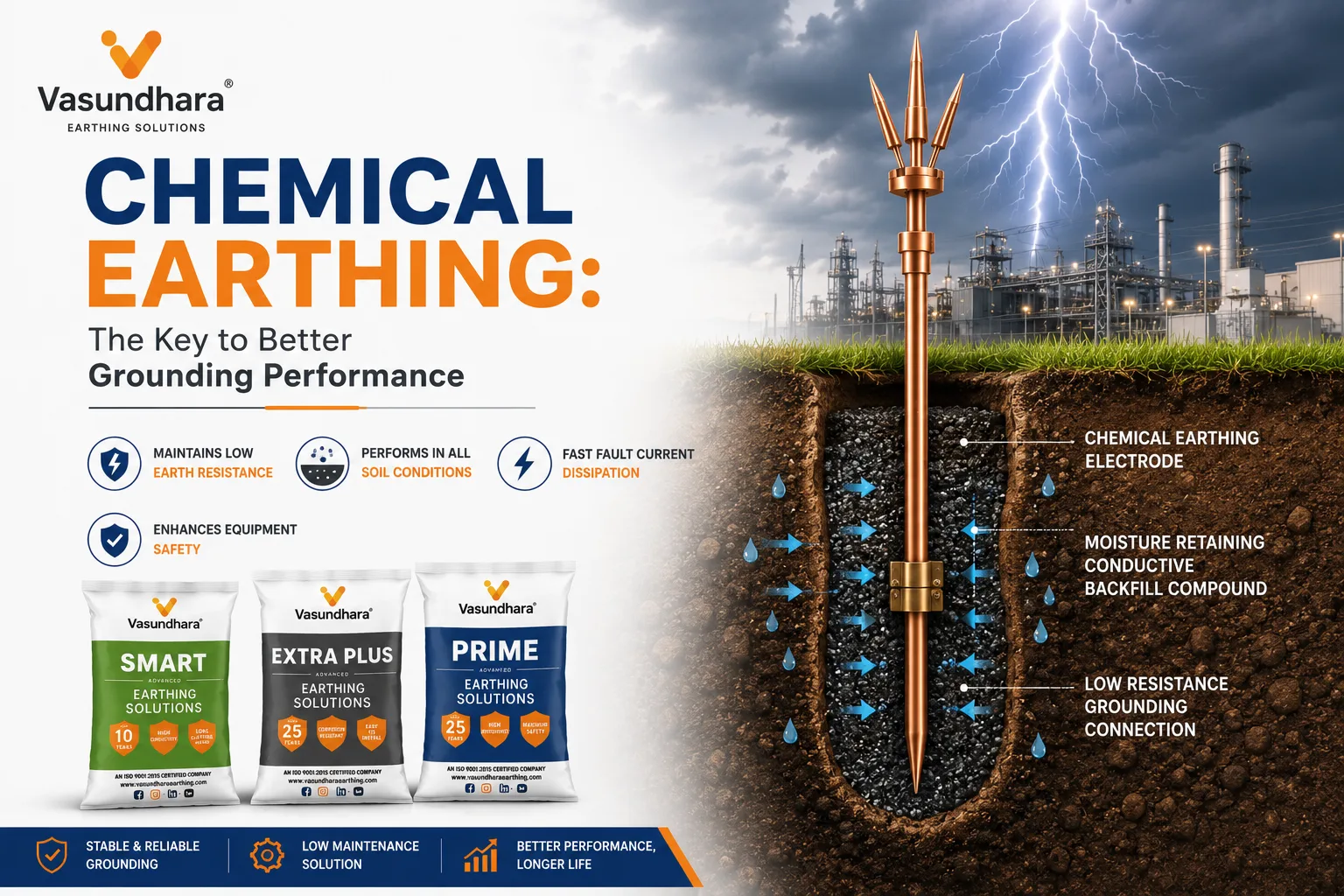
Instead of driving a bare pipe into untreated dirt and hoping for the best, a chemical setup uses a hollow or heavy-duty chemical earthing electrode placed inside a wider borehole. The space around that rod is then packed with a dense, highly conductive backfill compound, usually a mix of bentonite clay and graphite.
That backfill compound is the real secret sauce. When hydrated, it swells up and bonds directly to both the metal electrode and the surrounding earth, eliminating the air pockets and dry voids that cause ground resistance to spike.
Even better, the compound absorbs ambient moisture from the subsoil and locks it in place. It doesn't wash away in heavy rain or dry out during heatwaves, creating a permanent, low-impedance envelope around the rod. You get a steady, low-resistance ground loop that holds its rating year after year, regardless of how poor or dry the native soil actually is.
How Chemical Earthing Improves Grounding Performance
One of the biggest advantages of chemical earthing is its ability to provide stable grounding under conditions where conventional systems often struggle. Several factors contribute to its superior performance.
Maintains Low Earth Resistance
Chemical earthing fixes this seasonal volatility by changing the physics of the pit itself. The surrounding backfill compound acts like a conductive sponge, continuously pulling moisture from deeper subsoil layers and locking it against the chemical earthing electrode. Even during prolonged dry spells, that conductive zone around the rod stays fully hydrated and active.
Instead of watching your ohm readings swing dramatically on a quarterly test log, low resistance earthing around the rod stays virtually flat, giving you a predictable, stable ground connection throughout the year.
Performs Well in Different Soil Conditions
Standard copper rods won't be effective if there's a low resistance reading on a site with solid basalt, loose gravel, or dry sand. In high-resistivity soil, untreated dirt simply doesn't have enough charge carriers to disperse energy efficiently.
Chemical earthing bypasses native soil limitations entirely. Because the backfill compound expands to fill every micro-gap and fissure in the borehole, it dramatically increases the effective surface area of the electrode. Instead of relying on poor local soil, you are essentially creating a custom, high-conductivity zone around the rod that hits target ohm ratings even on the toughest terrain.
Improves Fault Current Dissipation
When a heavy ground fault or surge occurs, thousands of amperes need to escape into the earth in milliseconds. If the path has high resistance, that energy backs up, creating dangerous step-and-touch voltages on site and blowing past sensitive equipment insulation.
Because the conductive compound lowers the overall impedance of the pit, fault energy moves off the site wiring instantly. This rapid dissipation ensures that the electrical grounding system's performance improves, allowing protective relays and circuit breakers to detect the ground fault and trip without delay, clearing the hazard before high voltage can flash over into control panels or structural steel.
Delivers Stable Long-Term Performance
Bare iron and copper rods driven into raw dirt have an underground expiration date. Over time, acidic soil, fluctuating water tables, and oxygen exposure eat away at the metal, while the surrounding earth compacts and pulls away, causing ground resistance readings to creep upward every year.
Chemical earthing breaks this cycle of underground decay. Enclosing the electrode inside a dense, inert backfill compound creates a protective barrier that seals the metal off from direct soil corrosion and oxidation. Because high-quality conductive compounds don't leach out during heavy rains or dry into dust during summer heatwaves, the electrical contact area stays intact for decades.
You end up with a ground loop that maintains its original low-resistance rating year after year. It's not that it will be fully maintenance-free earthing, but it will save your maintenance crew from constantly re-treating dry pits or driving extra rods just to pass annual compliance checks.
Key Benefits of Chemical Earthing
The growing preference for chemical earthing isn't just because it offers lower earth resistance. It provides a combination of safety, reliability, and long-term performance that makes it suitable for installations where consistent grounding is critical. Here are some key chemical earthing benefits to keep in mind when choosing earthing systems:
Improves Electrical Safety
High ground resistance turns site steel, equipment frames, and maintenance personnel into unintended shock paths during a fault. A chemical envelope clears energy into the earth in milliseconds. That rapid discharge eliminates lethal touch-and-step voltages while giving protective relays the clean signal they need to trip instantly. That's why an earthing system for electrical safety is critical.
Protects Critical Electrical Assets
A lingering fault or surge will punch right through transformer insulation and fry sensitive PLC cards. Because conductive backfill never dries into air-gapped crust, it continuously bleeds off high-voltage transients and stray ground noise, saving high-dollar switchgear and control racks from sudden, costly write-offs.
Requires Minimal Maintenance
Conventional ground pits demand constant babysitting, regular water pouring, salt-and-charcoal top-ups, and routine digging just to pass annual inspections. Chemical earthing ends that cycle. Because the moisture-retaining backfill compound doesn't dry out or wash away, the pit maintains its low-resistance envelope naturally, dropping routine site maintenance to near zero.
Offers a Longer Service Life
Bare metal pipes driven into raw earth corrode rapidly as soil acids and oxygen eat away at the connection. Chemical electrodes use heavy copper bonding or galvanized steel fully encapsulated in an inert compound. This protective envelope seals out ambient oxygen and harsh soil chemicals, preventing underground decay and keeping the system operating reliably for 20+ years.
Where Chemical Earthing Is Used
Standard earth rods fall short when soil resistivity spikes or gear gets too sensitive for voltage noise. Chemical setups are specced across several critical sectors:
- Data Centers & Telecom: High-frequency noise and static spikes will easily bleed into server racks or link gear. Chemical pits bleed off these micro-transients before they corrupt data or drop signals.
- Solar Parks, Wind Farms & Substations: Utility renewables are almost always built on dry, rocky, or sandy ground where hitting target ohm ratings is brutal. The backfill compound gives you a low-impedance path without having to trench hundreds of meters of extra copper grid.
- Manufacturing Facilities: Industrial plants running heavy motor drives, welding rigs, and automated lines produce constant stray currents. Chemical earthing absorbs this continuous noise to stop ground-loop feedback into PLC controllers.
- Hospitals & Transit Hubs: Medical scanners, life support, and rail signaling controls can't tolerate neutral-to-ground voltage drift. A stable pit holds that reference voltage strictly at zero.
- Commercial High-Rises: In dense urban builds, you rarely have room to drive an array of ten conventional rods. Chemical earthing fits a high-capacity ground loop into a tiny basement utility footprint.
Choosing the Right Chemical Earthing Solution
Getting ground resistance right isn't as simple as picking a rod off a warehouse shelf. Soil chemistry, peak fault current, and site constraints differ on every project, so hardware has to match the exact dirt under your feet.
Thinly plated metal quickly degrades in acidic or wet ground. Severe environments demand heavy copper-bonded steel with at least a 250-micron coating, or high-grade stainless steel where chemical runoff is a factor.
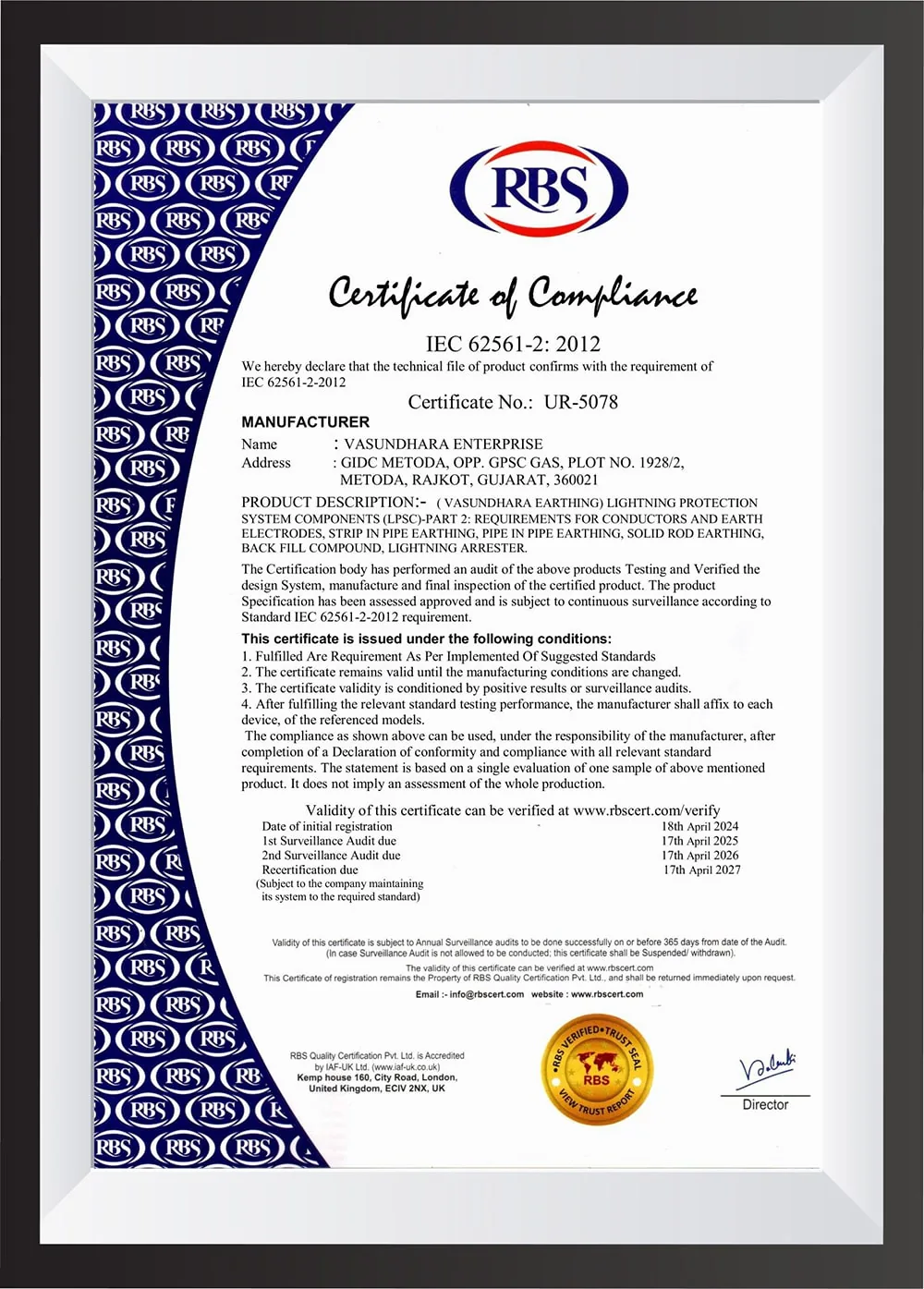
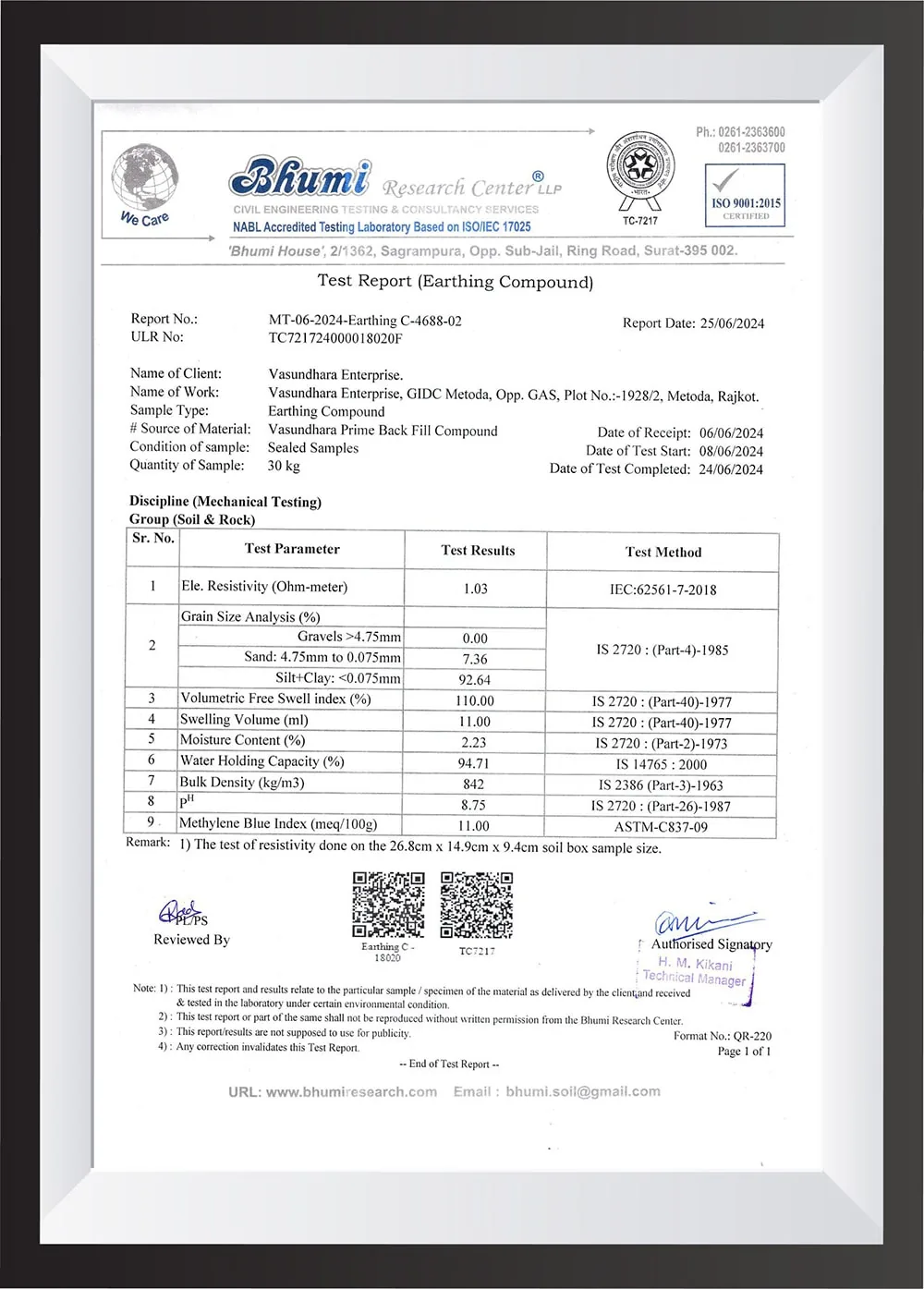
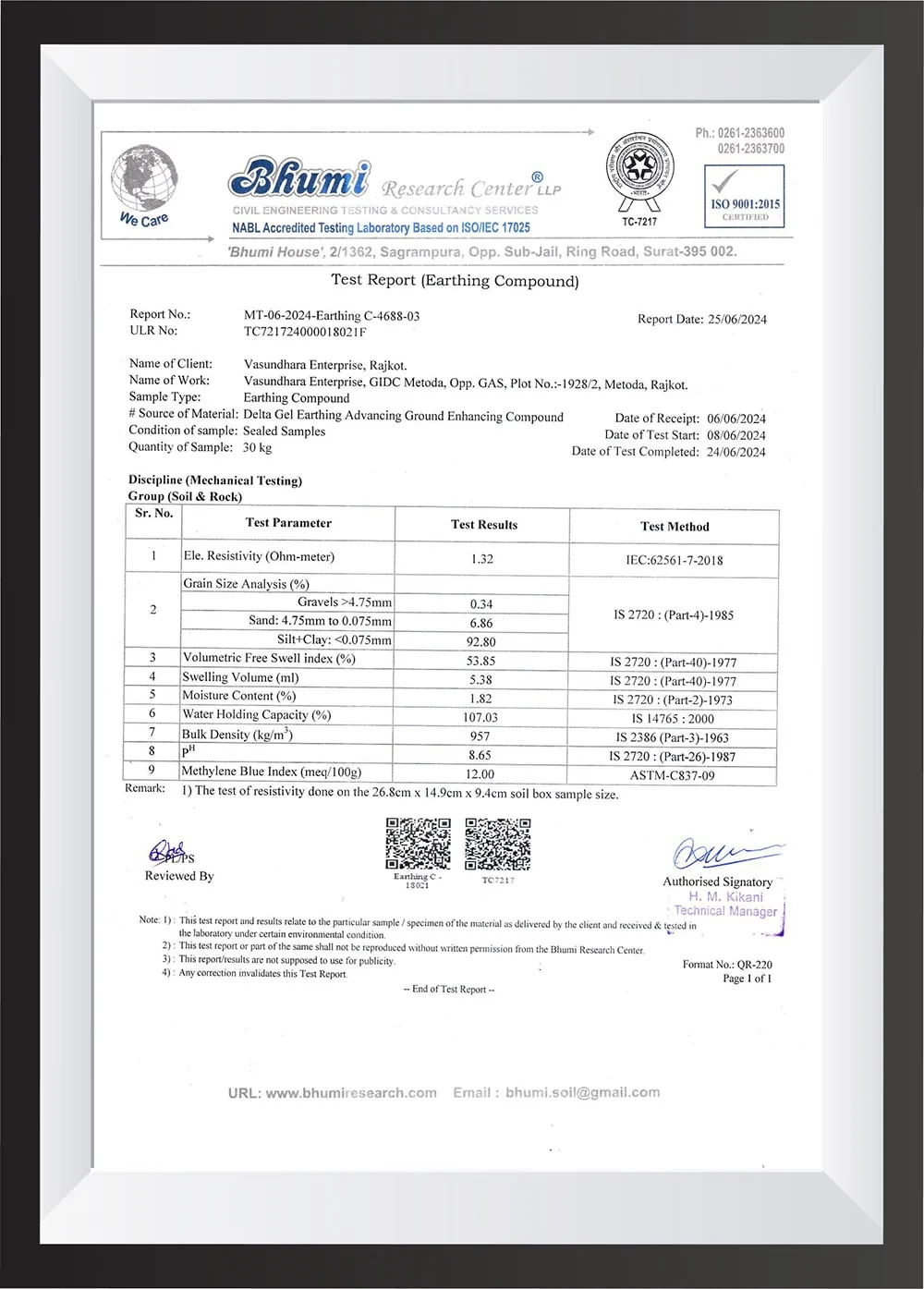
The backfill compound is just as critical as the pipe. Unverified mixtures dry out, crack, or wash away after a couple of rainy seasons, sending ohm readings through the roof. Stick to certified, non-leaching graphite compounds (like IEC 62561-7 rated) that hold moisture year-round.
Finally, hardware needs to be sized for maximum kiloamp surges to prevent soil bake-out. Ensure boreholes are slurried without air gaps, and partner with a supplier who evaluates your soil resistivity data before commissioning day.
Need an earthing system engineered for long-term compliance? Reach out to our technical team today to analyze your site soil data and get a customized, high-performance grounding layout built for your facility.
FAQs
Q.1. Does chemical earthing work in all soil conditions?
A: Yes. It is designed to perform effectively in a wide range of soil conditions, including sandy, rocky, and low-moisture areas where conventional earthing may struggle.
Q.2. Can chemical earthing protect sensitive electrical equipment?
A: Yes. By maintaining effective grounding, it helps protect equipment such as transformers, UPS systems, switchgear, control panels, and industrial machinery from electrical faults.
Q.3. Does Vasundhara Earthing provide high-quality chemical earthing electrodes?
A: Yes. Vasundhara Earthing manufactures durable, corrosion-resistant chemical earthing electrodes designed to deliver stable grounding across a variety of applications.