Home / Blog / Gel Earthing System Explained: Advantages, Uses & Performance
Recent Posts



What Is Gel Earthing? Advantages, Uses & Performance Explained
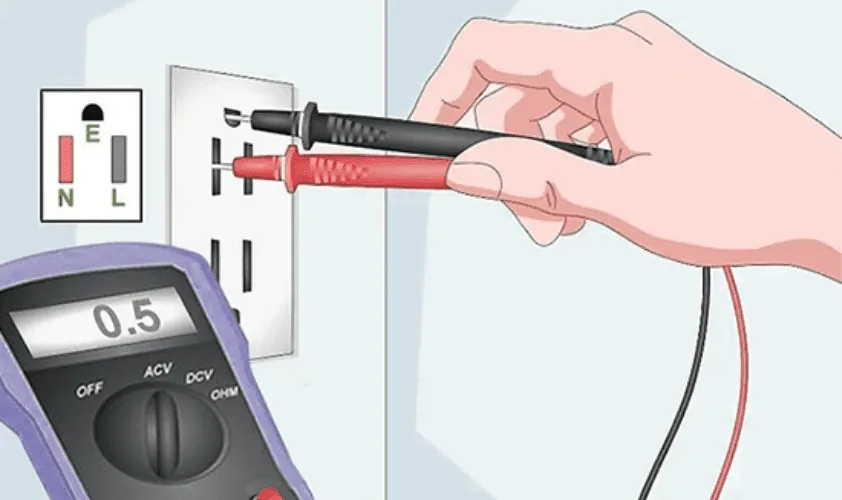
Most earthing systems don’t fail on day one. They degrade. Slowly. The resistance starts creeping up, moisture content reduces, and the system that once worked efficiently becomes unreliable.
In many sites, especially across dry or mixed soil conditions, you’ll notice this pattern clearly. Salt-based pits lose effectiveness, charcoal dries out, and what remains is a high-resistance path that cannot safely carry fault current when it matters most.
That’s where gel earthing comes into the picture. Want to understand what gel earthing is, along with its use cases, advantages, and performance? Let’s take a closer look.
Definition: Earthing Gel
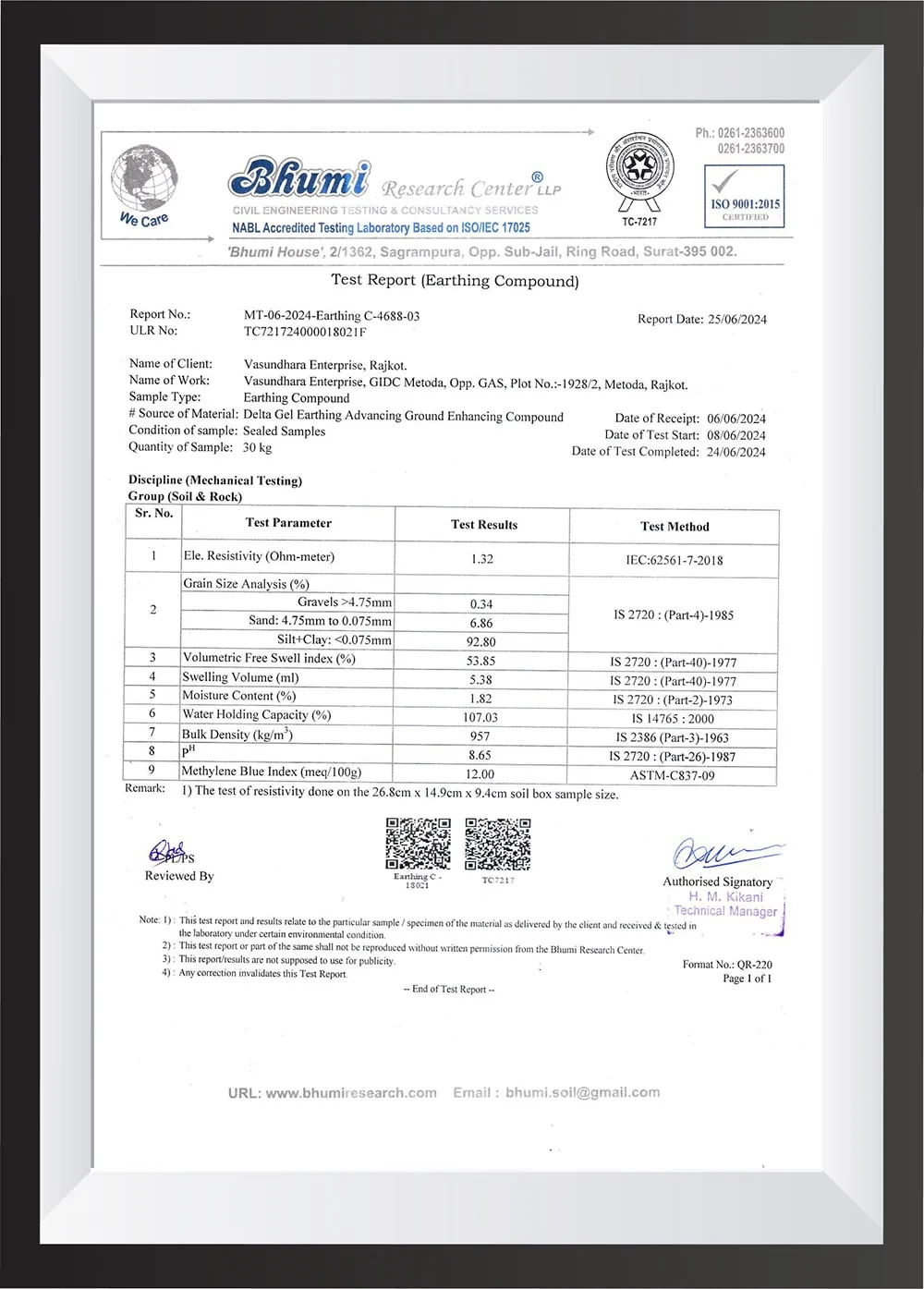
Earthing Gel is a grounding method that uses a conductive compound, commonly referred to as gel earthing, around the electrode to maintain low resistance. Instead of depending entirely on natural soil conditions, the system creates its own conductive environment.
The gel surrounds the electrode and holds moisture within its structure. This ensures that the contact between the electrode and soil remains stable over time. In simple terms, the system becomes less dependent on seasonal changes and more consistent in performance.
The Science Behind Gel Earthing Conductivity
The difference shows up when the soil starts drying. In a typical installation, once moisture drops, resistance begins to rise. That’s expected. What gel earthing changes is how fast that shift happens. The gel doesn’t let the system depend entirely on external moisture. It holds onto it.
Over time, you’ll notice the resistance doesn’t fluctuate as much. Even in dry patches, the electrode still maintains contact. That consistency is what actually enhances fault current flow, not just initial conductivity.
Advantages of Gel Earthing
The benefits usually become clear after the system has been in use for some time, not immediately after installation.
- More Stable Resistance Over Time - Unlike conventional pits where readings usually fluctuate, gel earthing tends to hold resistance within a tighter range, even as soil conditions change.
- Minimal Maintenance Requirement - You don't have to keep watering or adding salt regularly. Once the system is installed properly, there's no need for constant attention.
- Better Performance in Dry Conditions - In areas where soil loses moisture quickly, the gel helps maintain conductivity instead of letting resistance spike.
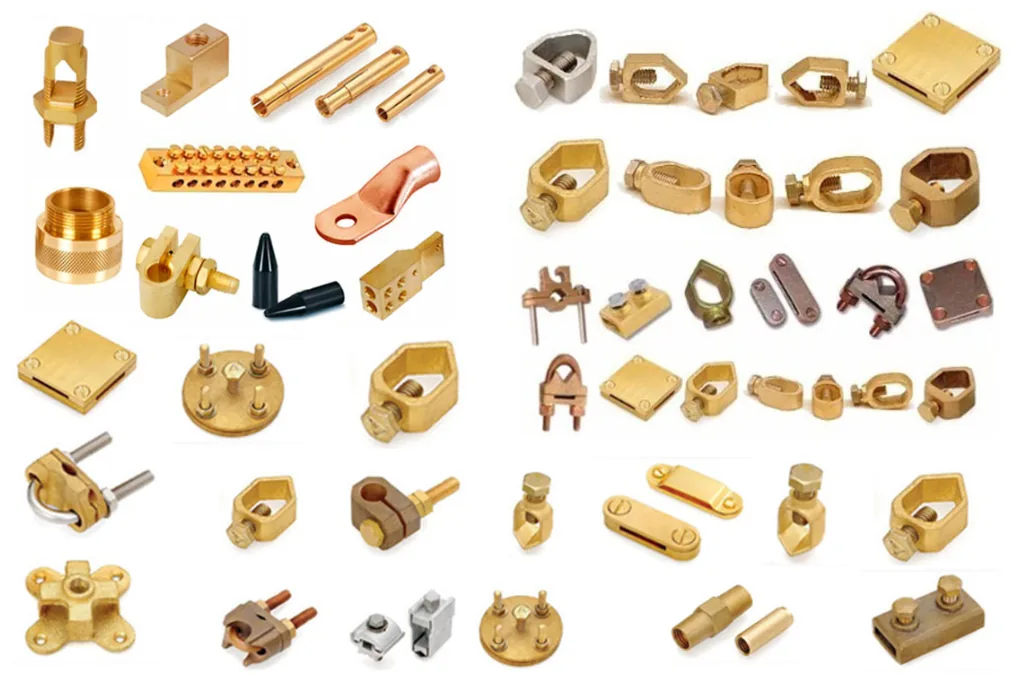
- Reduced Corrosion Impact on Electrodes - High-quality gel earthing electrodes, especially those using proper earthing rod copper bonding, are resistant to oxidation. This helps extend electrodes’ operational life.
- Less Dependency on Soil Quality - Even when soil conditions are inconsistent, the system doesn’t rely entirely on external moisture to perform.
Where Gel Earthing is Commonly Used
You’ll usually see gel earthing where consistency matters more than cost.
Industrial setups, telecom sites, or locations with sensitive equipment, these are places where resistance variation becomes a concern. In such cases, engineers don’t want a system that needs regular correction.
In regions with dry or mixed soil, like parts of Gujarat, gel earthing is often preferred simply because traditional pits don’t hold up for long without maintenance.
Performance in Challenging Soil Conditions
Soil rarely behaves the way it appears in reports. On-site, you’re not dealing with uniform layers. One part of the pit may hold moisture, while another dries out quickly. In some locations, you’ll even find mixed soil including part clay, part sand, with patches of rock in between. These variations are exactly where traditional earthing systems start losing consistency.
With salt-and-charcoal pits, performance usually drops as soon as moisture levels change. Resistance readings begin to fluctuate, and maintaining stable values becomes a regular task. Gel earthing changes how the system reacts to these variations:
- Less impact from dry soil pockets: Even when surrounding soil dries out, the conductive zone around the electrode remains relatively stable.
- More uniform current flow: Instead of depending on uneven soil layers, the gel creates a consistent path around the electrode.
- Reduced seasonal variation: Resistance doesn’t swing as much between monsoon and peak summer conditions.
- Better contact in mixed terrain: In rocky or partially compact soil, the gel helps improve surface contact where direct soil contact is weak.
Improper installation or insufficient backfill can still affect performance. But compared to traditional setups, gel earthing reduces how much soil behavior controls the outcome, and that’s what makes it more reliable in the field.
Installation Considerations That Affect Performance
It is possible that even a reliable system giving poor outcomes. Even a good system can give poor results if the installation is rushed. Depth matters. Backfill matters. If the gel isn’t evenly packed around the electrode, you’ll end up with weak spots. Those weak areas show up later as unstable resistance readings.
Expert Tip: On-site teams often overlook compaction. Loose backfill reduces effective contact, something you only notice during testing.
Why Quality of Materials Still Matters
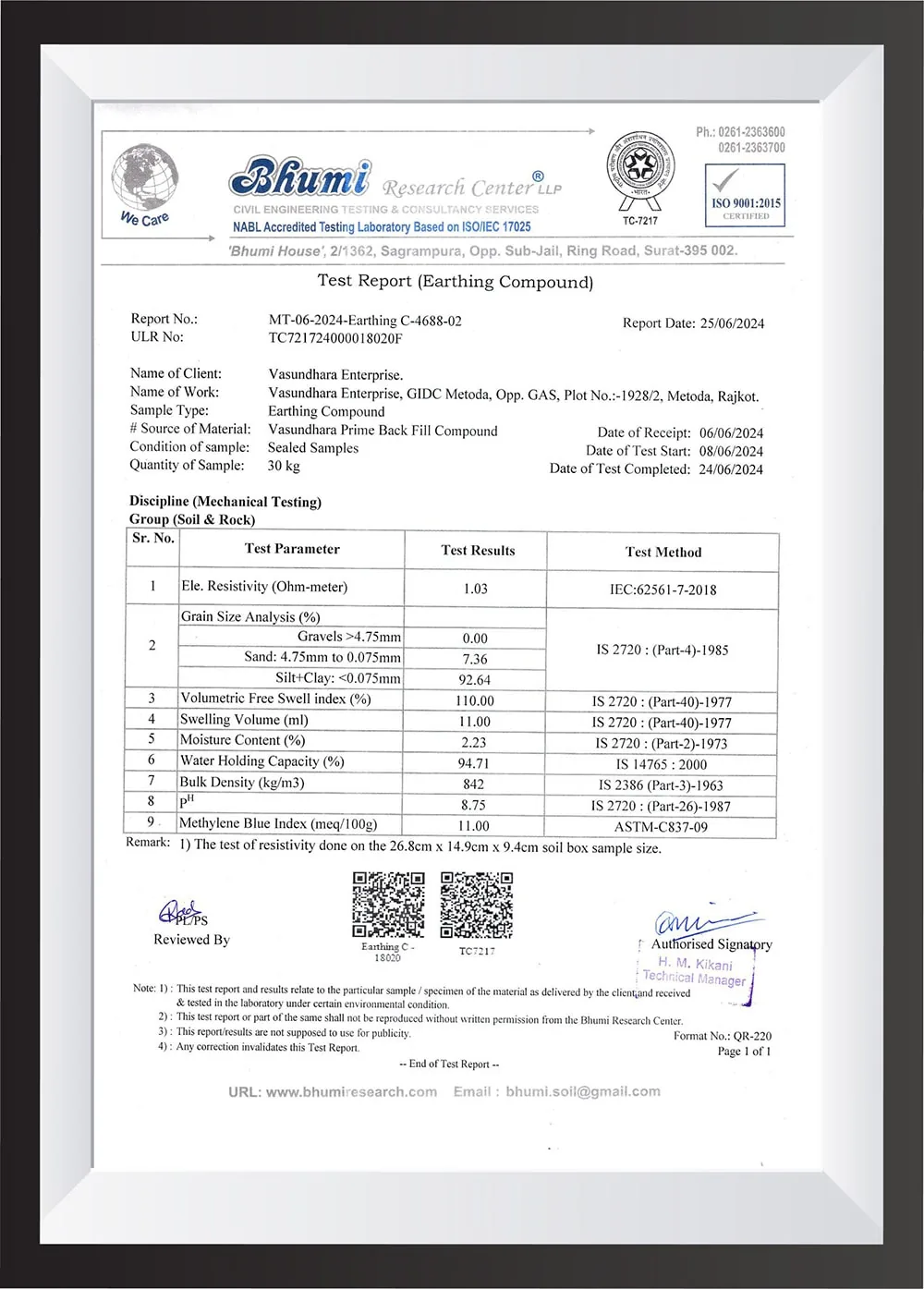
Not all gel earthing setups perform the same, even if they look similar. In some cases, resistance values look fine initially but start shifting within months. That usually points to material quality, either the compound or the electrode itself. Thicker copper bonding and stable gel composition don’t show their value immediately. But over time, that’s what keeps the system from degrading.
Final Perspective: A Shift Toward Predictable Grounding
The real benefit of choosing gel earthing isn’t lower resistance, but predictable behavior. Engineers don’t just want good readings during installation. They want those readings to stay within range months later, without constant correction. That’s where gel earthing stands out. It doesn’t eliminate all variables, but it reduces how much they affect the system. And in grounding, that level of predictability makes a practical difference.
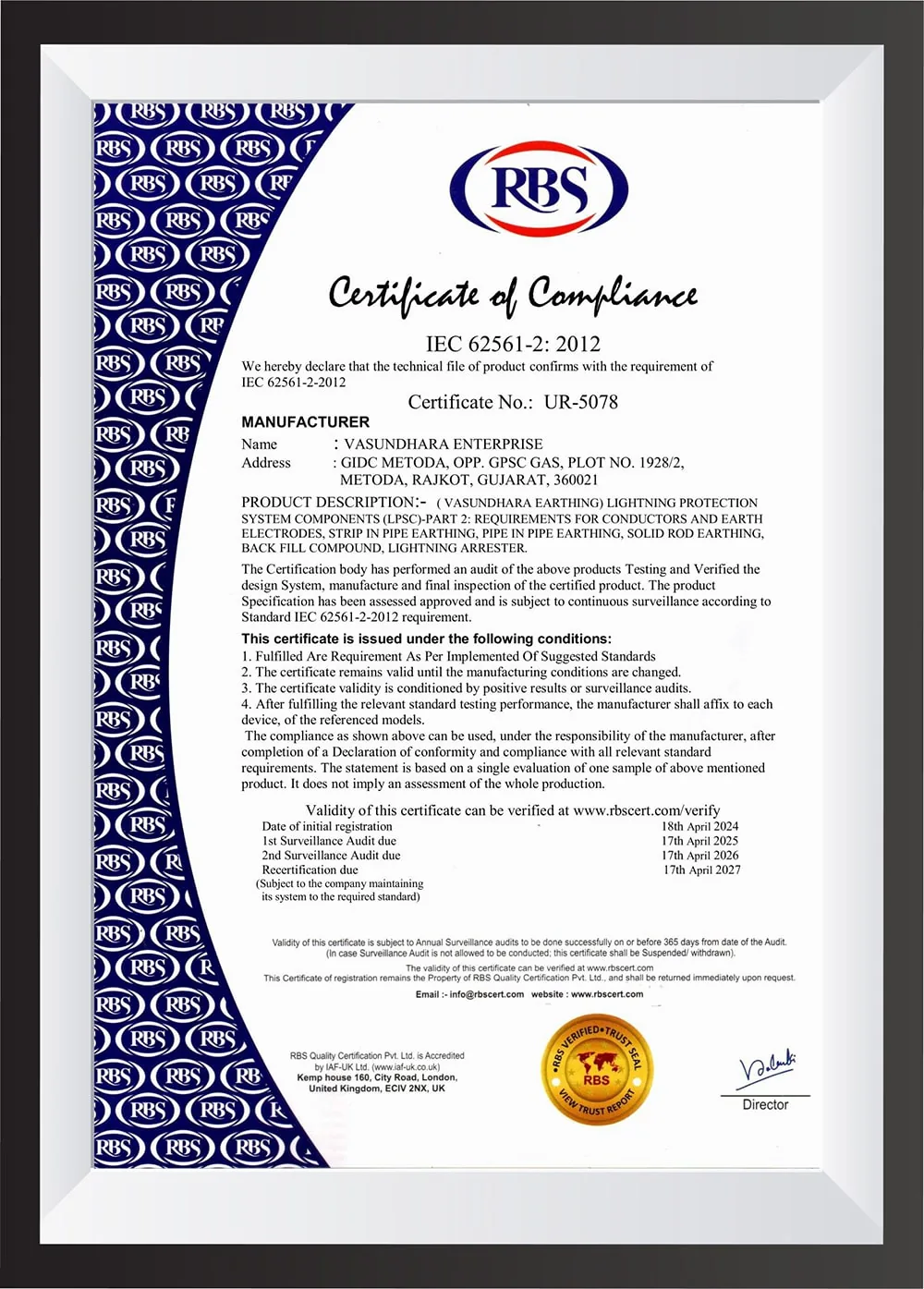
Are you shortlisting reliable gel earthing electrode manufacturers? Connect with Vasundhara Earthing for high-end assistants. We offer best-quality earthing solutions including gel earthing systems for various requirements.


Contact Info
Office : 402, Aditya One Corporate, OPP. Iscon Temple, Kalawad Road, Rajkot 360005
Factory : C/1928/2-3, J Road, Metoda GIDC, Gate No. 2, Metoda, Rajkot - 360007 (GUJARAT) INDIA.
Customer Care No.: +91 90330 04276