Recent Posts


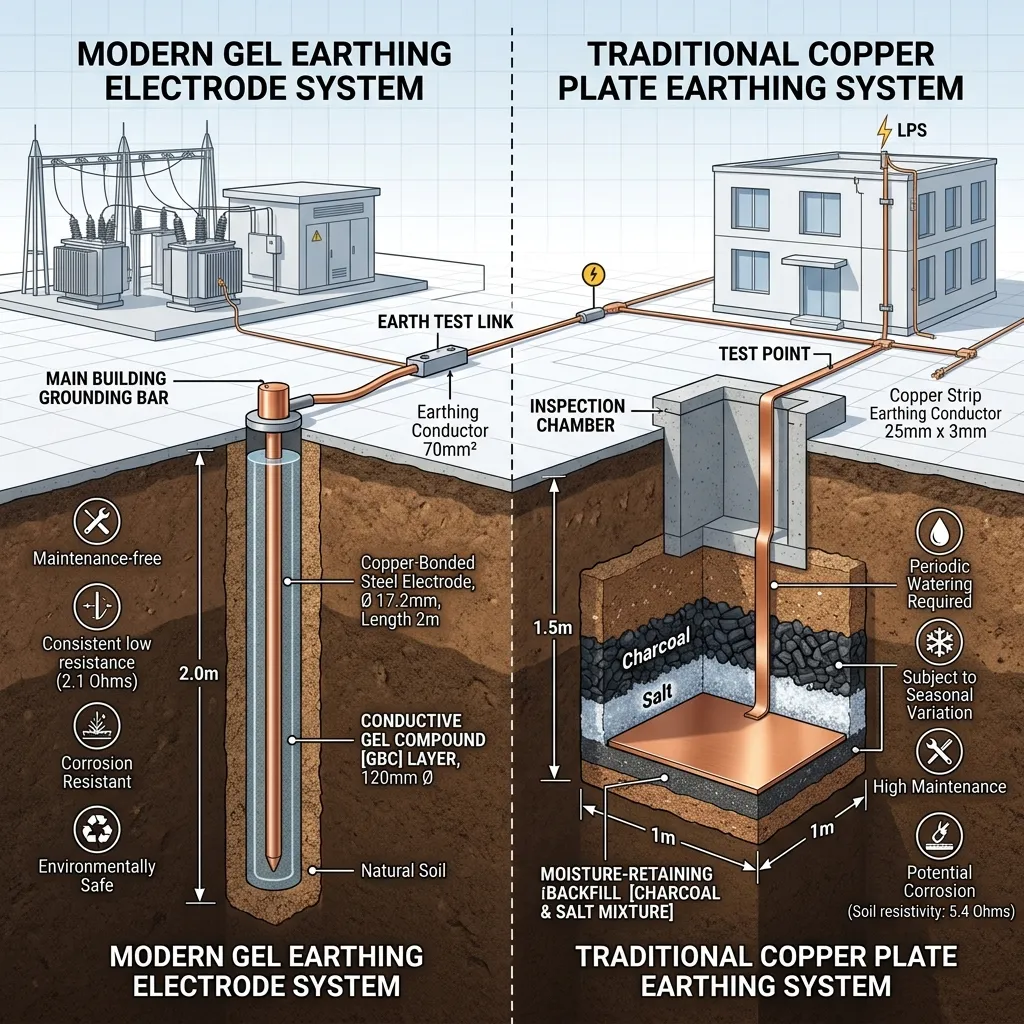
Which Is Better: Gel Earthing Electrode or Copper Plate Earthing?
There has been a common argument between selection of gel earthing electrode and copper plate earthing. Buyers often get confused when investing in earthing protection systems. These two are different types of earthing systems.
The debate is about electrical grounding systems failing for one reason more than any other: unstable soil conductivity under changing environmental conditions. Traditional copper plate earthing systems worked effectively for decades in moisture-rich zones, yet industrial load growth, rising fault current magnitude, and aggressive soil chemistry have pushed many sites toward electrolytic grounding technologies like the gel earthing electrode. Here, failure becomes expensive.
We, as one of the trusted gel earthing electrode manufacturers, have inspected plate earthing installations where resistance values moved from 1.8 ohms to nearly 9 ohms during dry summer cycles because the surrounding soil lost conductive moisture layers. Fault dissipation efficiency dropped sharply, creating dangerous touch voltage exposure near transformer panels and generator rooms.
Understanding Copper Plate Earthing
Copper plate earthing depends on a horizontally buried copper conductor plate surrounded by charcoal and salt compounds. The system requires excavation across a wider footprint because conductivity depends heavily on lateral soil contact area and moisture retention around the plate surface. Depth becomes limited.
Most plate systems remain installed between 2.5 and 3 meters because excavation beyond that point increases labor complexity and civil cost rapidly. Soil stratigraphy changes continuously below surface level, which means shallow horizontal plates often remain trapped inside dry or rocky soil bands with poor ionic mobility. Current flow weakens.
Copper itself offers excellent conductivity, yet galvanic corrosion becomes a serious concern where groundwater contains chlorides, industrial contaminants, or acidic compounds. Corrosion gradually reduces effective conductor thickness and compromises long-term fault current carrying capability.
Copper deteriorates slowly.
Copper Plate Earthing: Technical Snapshot
| Parameter | Copper Plate Earthing |
|---|---|
| Installation Type | Horizontal |
| Moisture Dependency | High |
| Corrosion Exposure | Moderate to High |
| Theft Risk | High |
| Seasonal Resistance Variation | Significant |
The Anatomy of the Gel Earthing Electrode
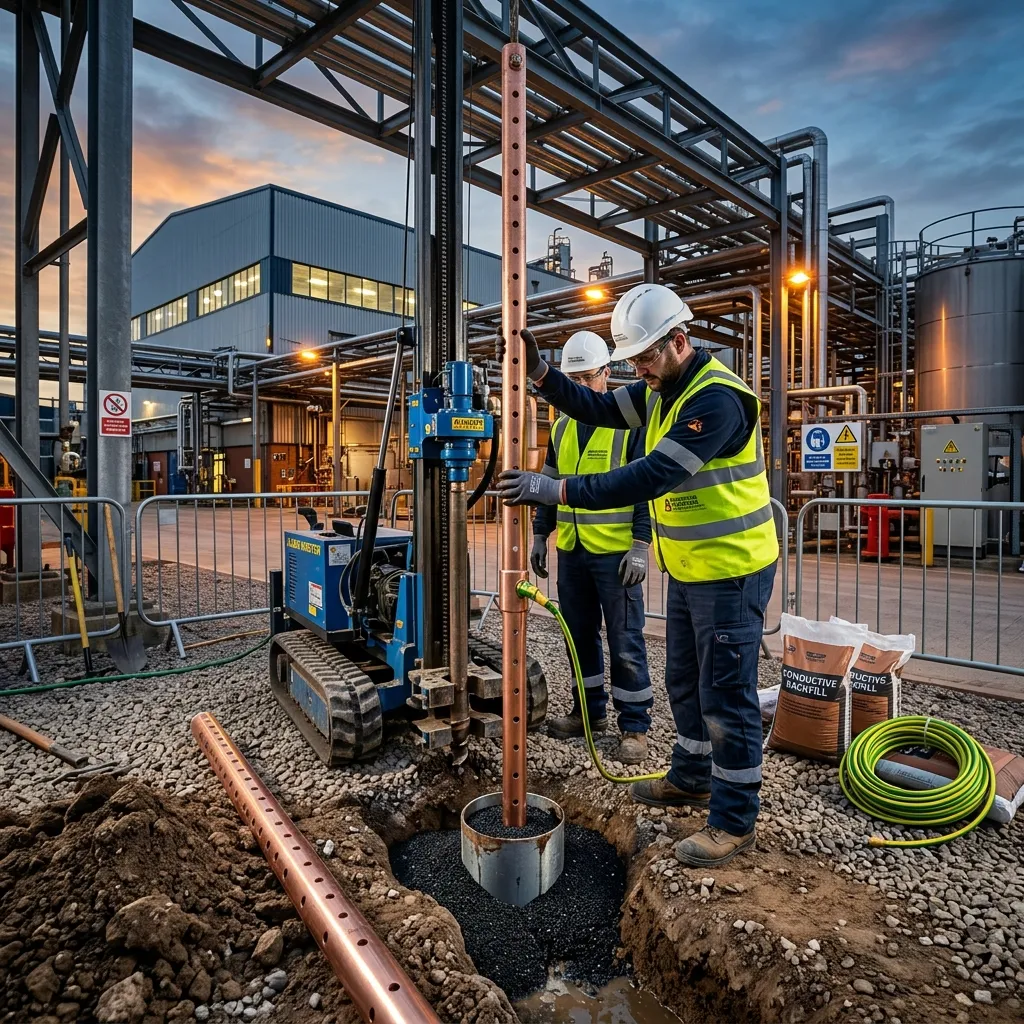
A gel earthing electrode uses a vertical conductive pipe combined with a hygroscopic crystalline compound engineered to retain moisture around the electrode body. The primary conductor continuously interacts with deeper moisture-rich strata instead of relying only on shallow soil conductivity. Vertical depth matters.
The conductive gel compound absorbs ambient moisture and creates an electrolytic environment that improves ion exchange around the electrode surface. This process maintains lower resistance values even during dry weather cycles where ordinary salt-charcoal pits fail badly. Moisture retention improves.
We generally recommend gel earthing electrode systems for substations, telecom towers, solar plants, and process industries where stable earth resistance directly affects equipment safety and fault clearing speed. Electrical stability improves.
Gel Earthing Electrode: Technical Snapshot
| Parameter | Gel Earthing Electrode |
|---|---|
| Installation Type | Vertical |
| Moisture Dependency | Controlled through gel |
| Corrosion Exposure | Lower |
| Theft Risk | Minimal |
| Seasonal Resistance Variation | Low |
Which One is a Better Option?
Installation Footprint
Copper plate earthing takes up more ground space because the plate depends on sideways current movement through nearby soil. Dry upper layers weaken conductivity faster than most sites expect.
Gel earthing electrode systems go deeper into naturally damp soil zones where conductivity stays steadier during changing weather conditions. Lower strata help.
Maintenance Frequency
Copper plate pits usually demand repeated watering once the salt and charcoal layer starts drying out. Miss one maintenance cycle and resistance values begin climbing quietly.
Gel earthing electrode systems hold moisture longer around the conductor, so maintenance teams spend less time reopening pits or correcting seasonal resistance spikes. Moisture loss hurts.
Total Cost of Ownership (TCO)
Copper plate earthing often becomes expensive after installation because copper rates, theft risk, corrosion damage, and recurring maintenance keep adding cost year after year.
Gel earthing electrode systems usually run with fewer corrective expenses since the resistance level stays comparatively more stable over longer operating periods. Operating costs differ.
The Vasundhara Engineering Verdict
No two sites behave the same below ground level. We have seen gel earthing electrode systems perform exceptionally well in dry industrial soil where ordinary copper plate earthing struggled to hold stable resistance values. Moisture pattern, fault load, corrosion activity, and soil resistivity always change the final decision.
Ground behavior decides outcomes.
Planning an earthing setup for actual electrical load conditions? Speak with Vasundhara Earthing for grounding solutions developed around real site data, not standard assumptions.