Home / Blog / Chemical Pipe Earthing: Performance & Cost Factors
Recent Posts
Chemical Pipe Earthing: Factors That Affect Performance and Cost
Electrical faults do not forgive poor grounding. We have inspected industrial plants where conventional salt and charcoal pits crossed 12 ohms within two monsoon cycles. High-fault current systems cannot tolerate that instability.
Traditional earthing compounds dissolve rapidly. Salt migrates through soil layers during seasonal moisture movement. Charcoal loses conductivity once the surrounding soil dries beyond critical moisture saturation. The result is unstable fault dissipation and rising touch voltage exposure. This can be dangerous.
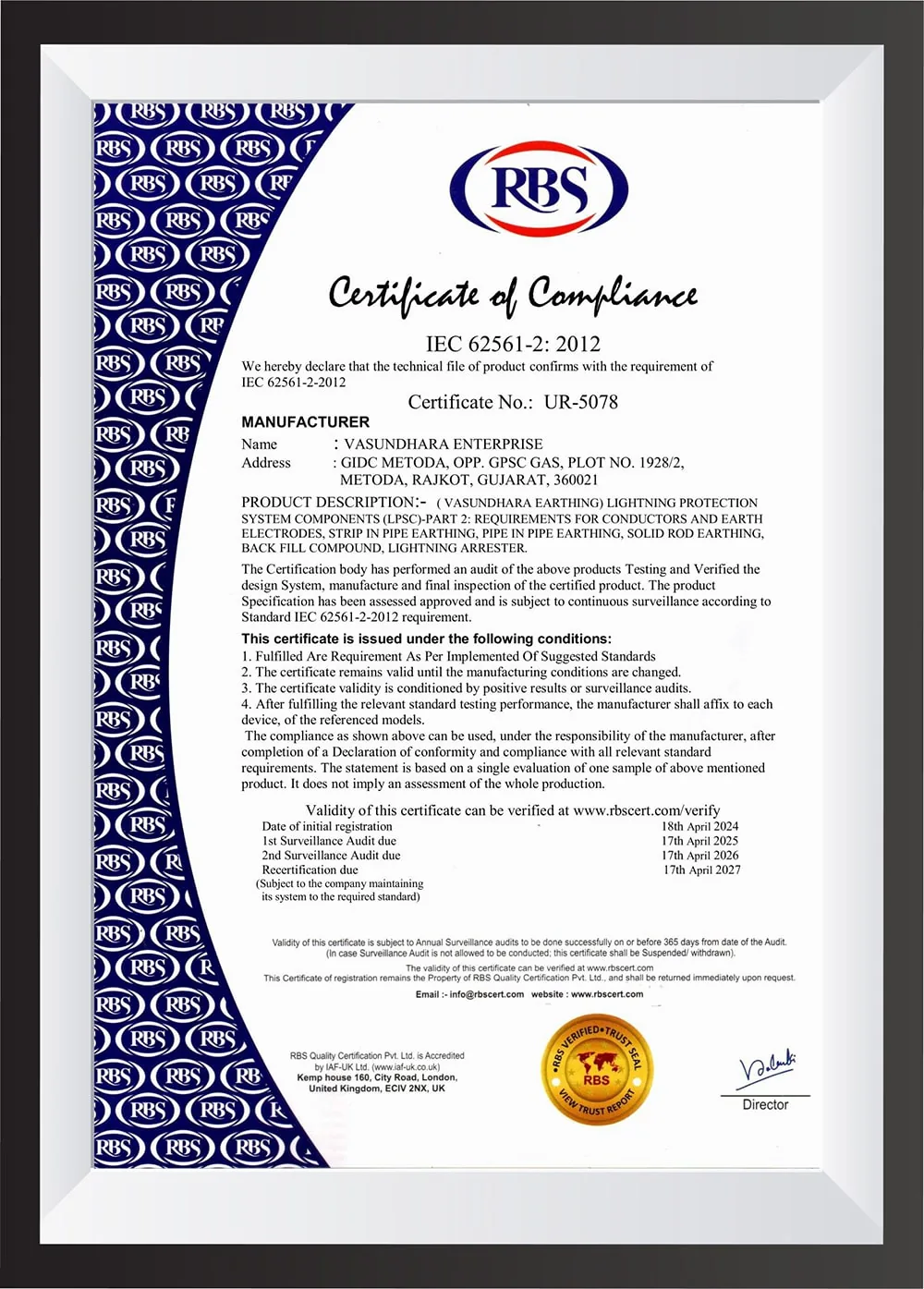
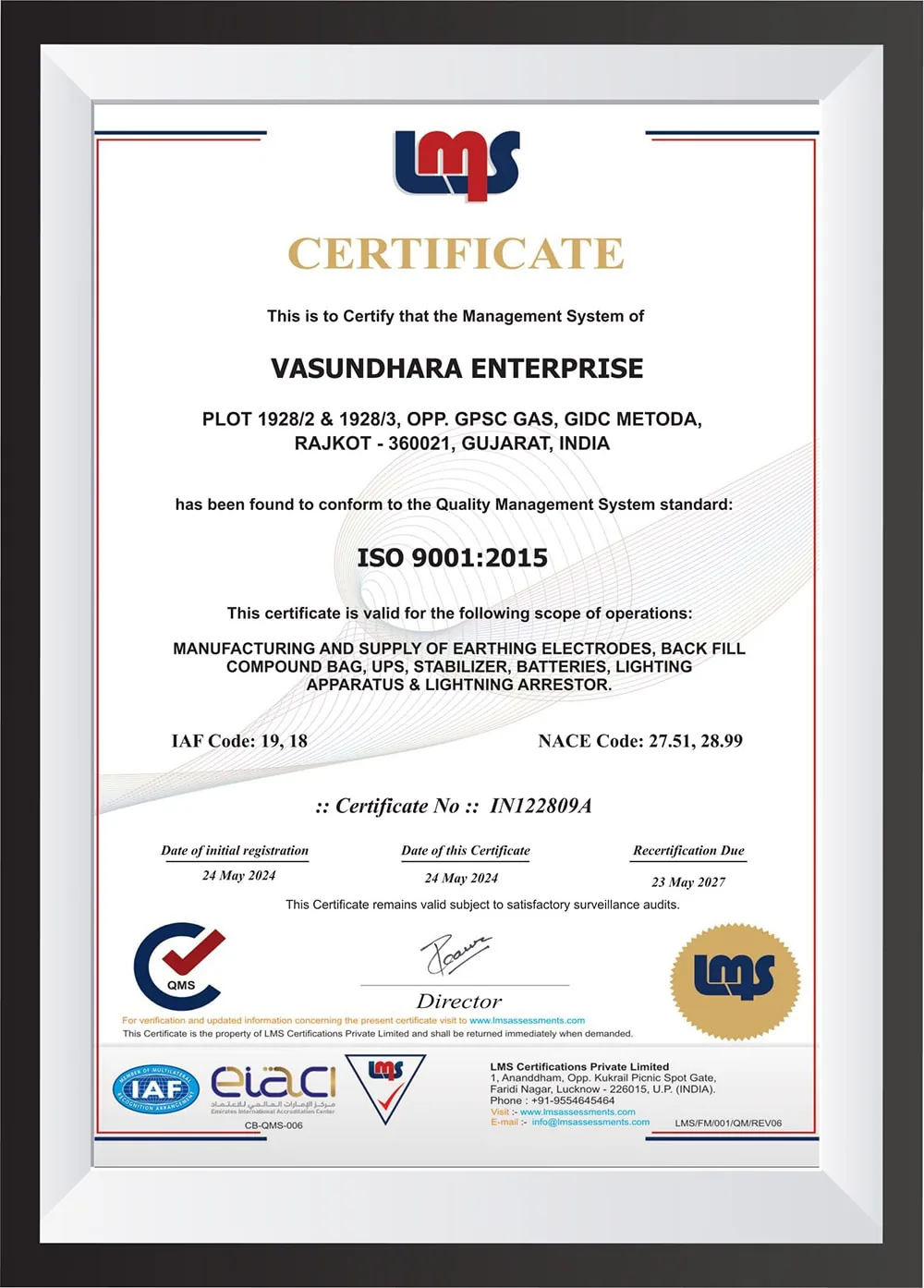
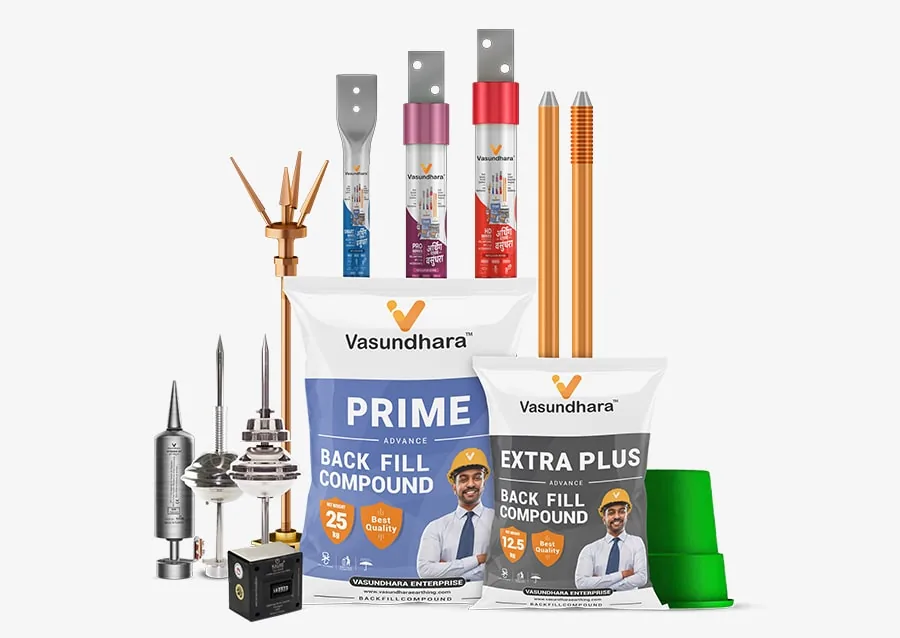
We at Vasundhara Earthing engineer systems around measured resistance values, not assumptions. Modern chemical pipe earthing addresses conductivity retention through controlled electrolytic behavior, optimized electrode geometry, and low-resistivity backfill compounds designed for long-term ion exchange stability.
Factors That Affect Performance and Cost of Chemical Pipe Earthing
Chemical pipe earthing performance is governed by three measurable variables:
- 1. Soil resistivity
- 2. Moisture retention capacity
- 3. Effective electrode surface area
Each variable directly changes the final earth resistance value and the total installation cost. There is no shortcut around these equations.
1. Soil Resistivity (Ohm-Meters)
Soil resistivity is measured in ohm-meters (Ω·m). Rocky terrain may exceed 1000 Ω·m, while clay-rich soil may remain below 50 Ω·m. The higher the resistivity, the greater the resistance against fault current dissipation.
Resistance increases rapidly. A chemical pipe earthing system installed in high-resistivity strata requires:
- Larger diameter electrodes
- Conductive mineral backfill
- Greater installation depth
- Additional parallel electrodes
- Higher copper or GI thickness
All five factors increase the bill of materials. We conduct Wenner four-point soil resistivity testing before recommending electrode dimensions. Blind installation methods create inconsistent results because soil conductivity changes every few meters vertically.
Soil layers matter. Low-resistivity zones reduce the final ohmic value with fewer electrodes. High-resistivity zones demand engineered compensation through conductive compounds and deeper bore depths. That raises costs.
2. Moisture Retention
Moisture around the electrode plays a major role in maintaining low earth resistance. Soil with adequate moisture allows fault current to pass more smoothly into the earth. Once the surrounding area starts drying out, resistance levels begin to rise. Performance starts dropping.
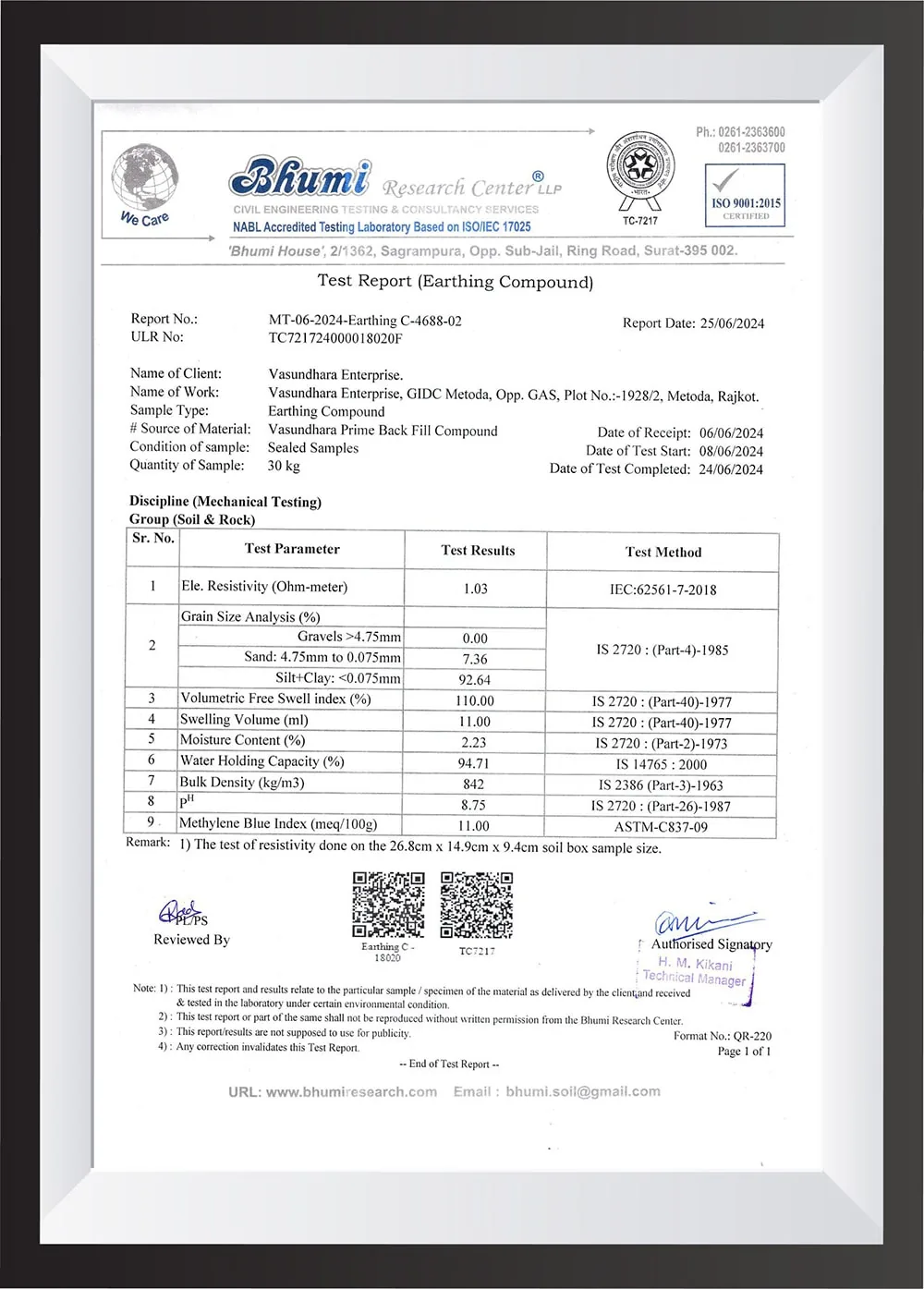
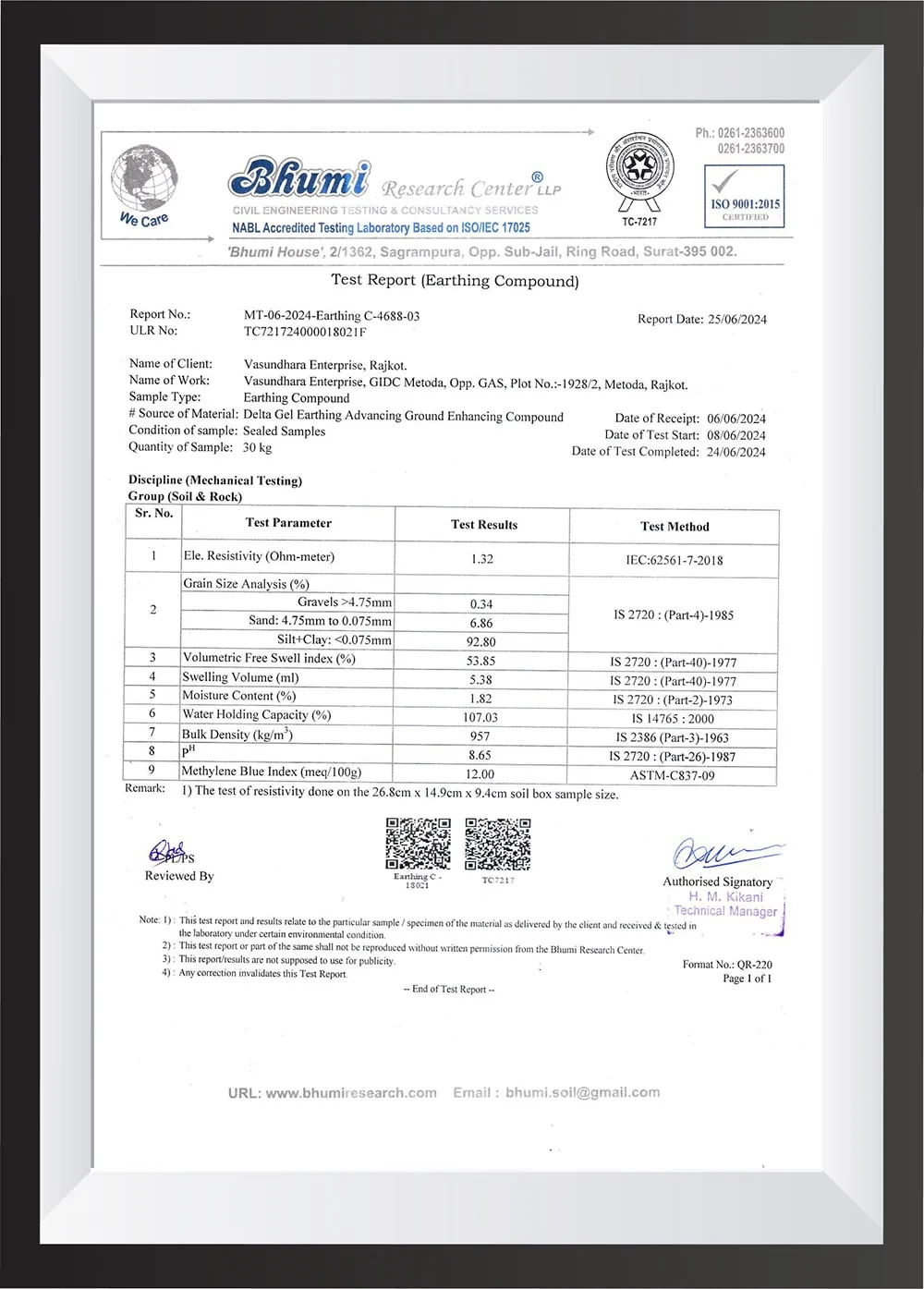
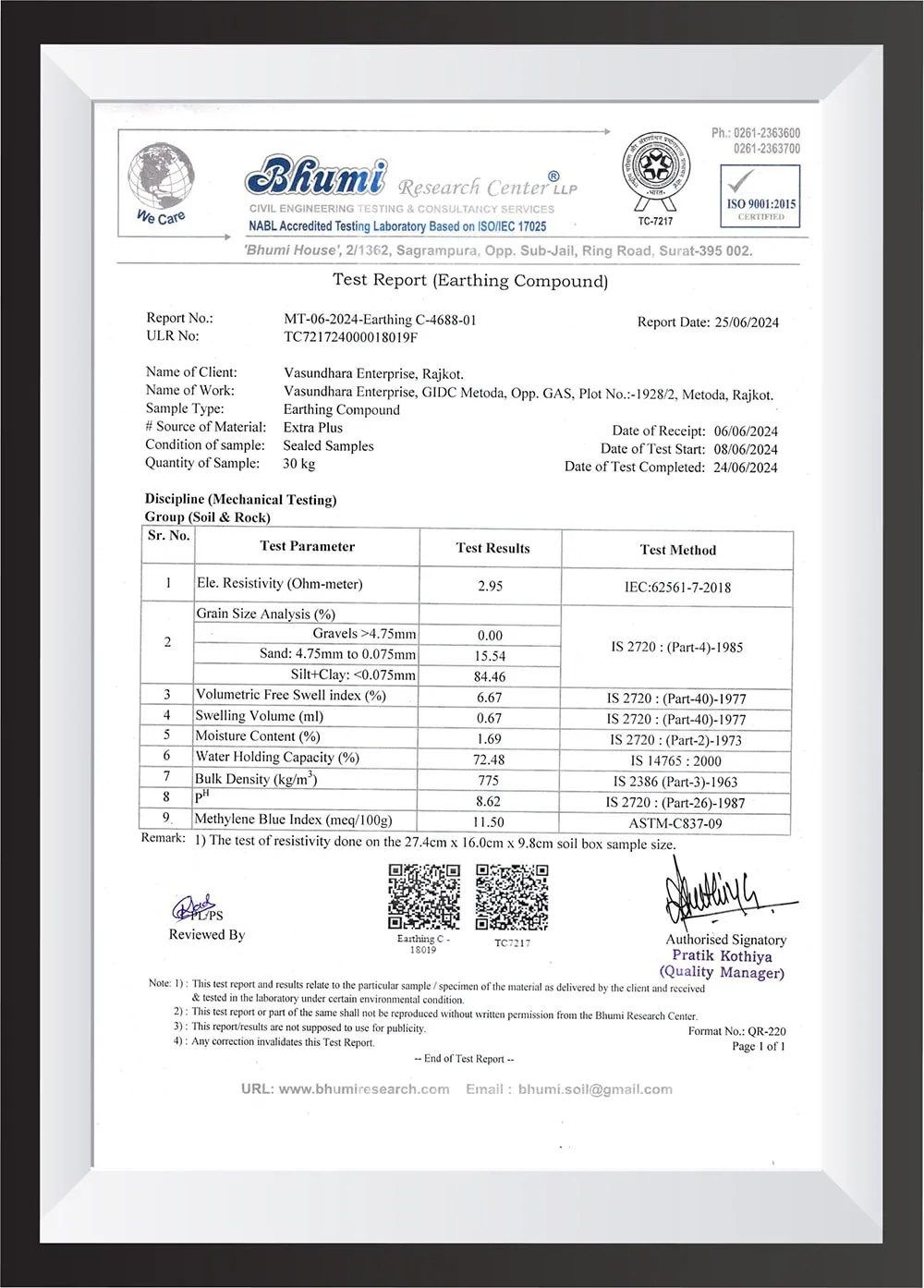
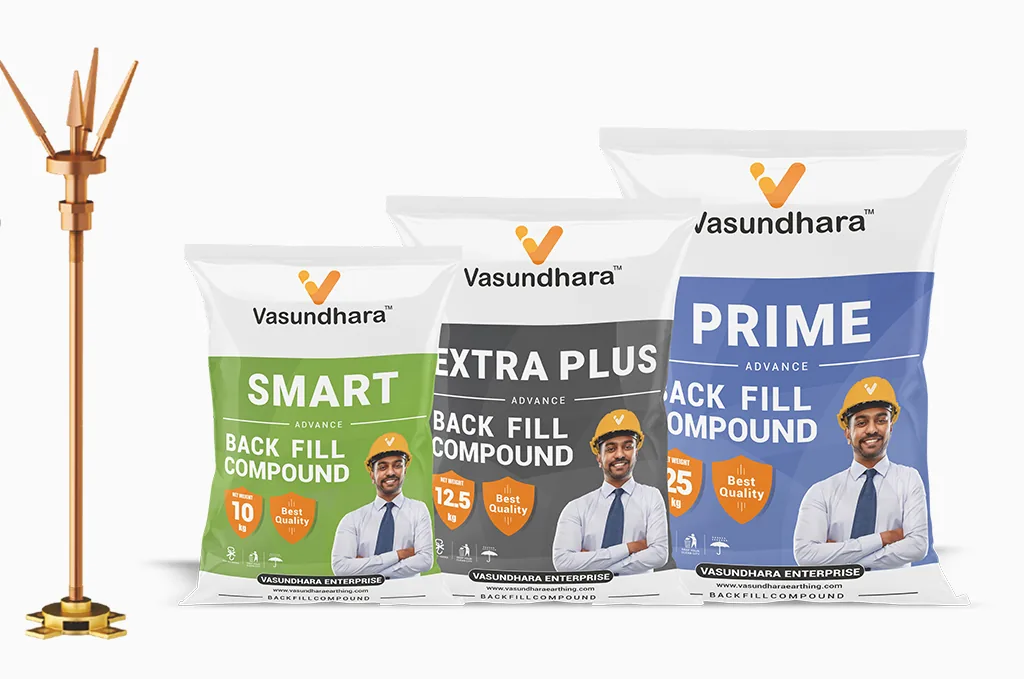
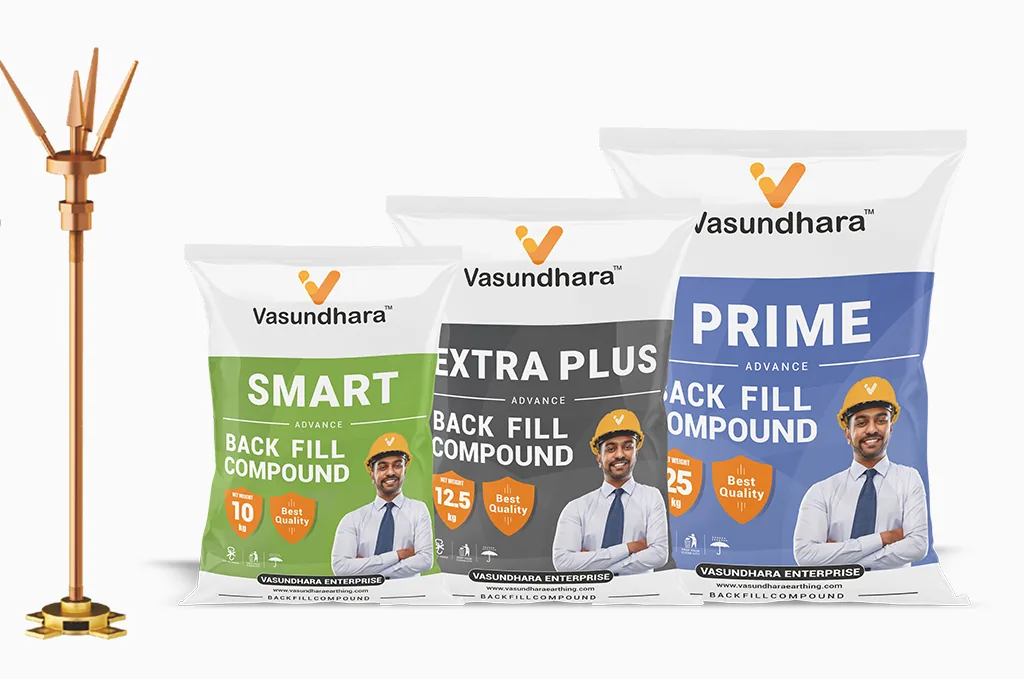
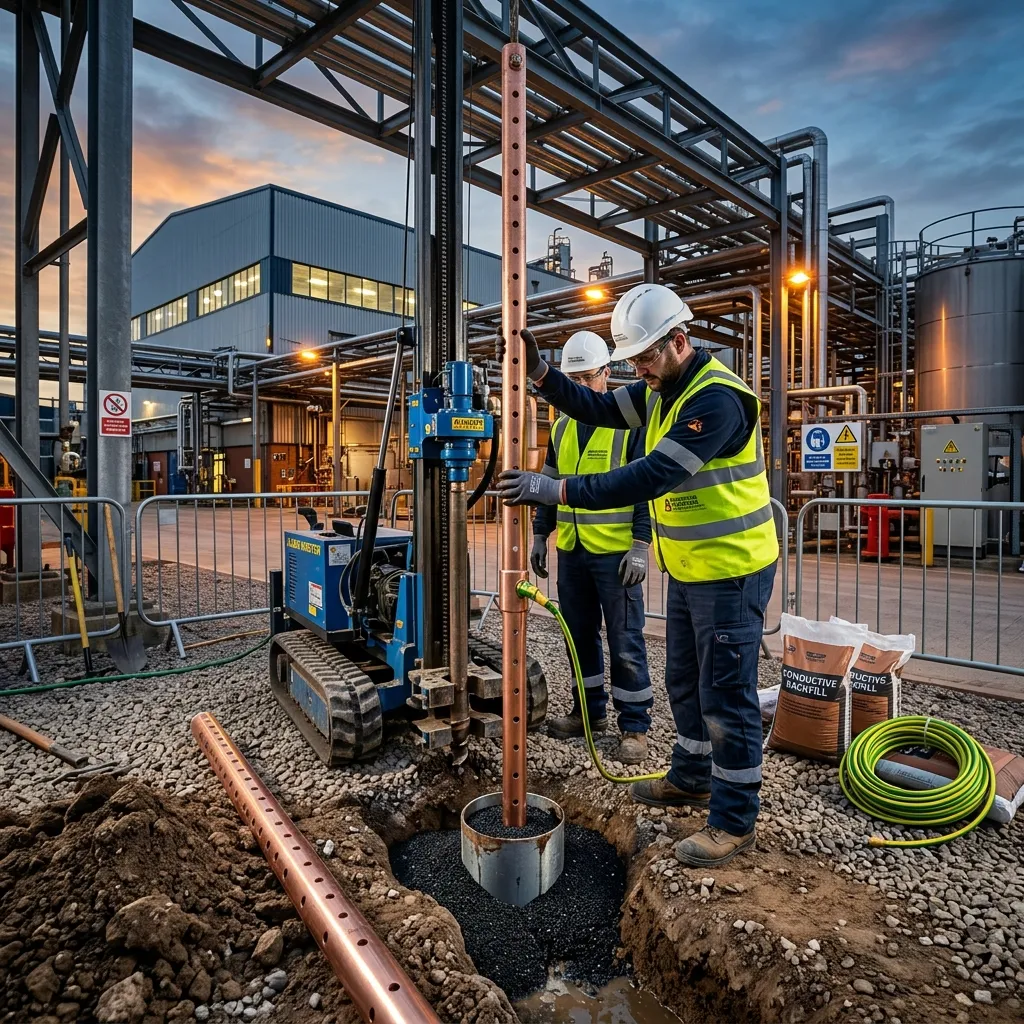
This is why chemical pipe earthing systems use conductive backfill materials such as bentonite, graphite mixtures, and mineral compounds. These materials help the soil around the electrode stay conductive for longer periods, especially during peak summer conditions.
We have inspected sites where earthing resistance remained near 1 ohm during monsoon but crossed 7–8 ohms in dry weather because ordinary filler material was used instead of proper conductive backfill. Better-quality compounds increase the initial installation cost, but they also reduce frequent maintenance, water pouring requirements, and early electrode deterioration. Remember, long-term stability saves money.
3. Electrode Surface Area
Electrical current dissipates through the external surface area of the electrode in contact with conductive soil. Larger surface exposure lowers current density and improves fault energy distribution. Surface area controls resistance.
This means:
- Larger pipe diameters reduce resistance
- Longer electrodes improve deep-soil contact
- Perforated electrodes increase ionic interaction
- Parallel electrodes distribute fault current efficiently
Geometry changes everything. A short electrode installed in shallow dry soil will always underperform compared to a deep vertical chemical pipe earthing electrode reaching stable moisture layers. Depth wins. Increasing surface area also increases: Metal consumption, Drilling requirements, Backfill volume, Installation labor, and Transportation weight. Performance and cost move together.
Material Grade: GI vs. Copper-Bonded
Electrode metallurgy directly impacts corrosion resistance, conductivity stability, and service life. Material selection becomes critical.
| Parameter | GI Electrode | Copper-Bonded Electrode |
|---|---|---|
| Approximate Lifespan | 8–15 Years | 25–40 Years |
| Corrosion Resistance | Moderate | Very High |
| Cost | Lower Initial Cost | Higher Initial Cost |
GI chemical pipe earthing systems remain suitable for moderate industrial applications with controlled soil chemistry. Copper-bonded electrodes perform better in corrosive soils, coastal regions, and high-moisture industrial environments. We evaluate chloride concentration, pH level, and groundwater chemistry before finalizing electrode material specifications.
What Actually Decides the Final Cost?
Many buyers compare chemical earthing pipe price only by checking pipe size or material grade. That approach creates problems later. A low-cost setup installed in high-resistivity soil may fail to maintain stable earth values within a short time. We calculate pricing after studying soil condition, moisture availability, fault load, and required resistance range. Copper-bonded electrodes, deeper drilling, and premium conductive compounds naturally increase project cost, but they also improve lifespan, corrosion resistance, and long-term electrical safety. Cheap earthing often becomes expensive later.
It is the common approach for most buyers to compare chemical earthing pipe price by just checking pipe size and material grade.
The Vasundhara Earthing Verdict
Chemical pipe earthing is not a commodity product. Soil chemistry, resistivity profile, groundwater behavior, and fault current magnitude all determine system design requirements.
Every site behaves differently. We at Vasundhara Earthing do not recommend the same solution for every site because ground conditions never stay the same from one location to another. A chemical pipe earthing system that performs well in moisture-rich clay may fail badly in rocky or dry soil conditions.
Our engineers study soil resistivity, seasonal moisture behavior, and expected fault load before deciding the electrode material, pipe depth, and backfill combination. That practical approach helps maintain safer and more stable earthing performance for the long run.
Need dependable chemical pipe earthing for your project? Connect with Vasundhara Earthing for site-tested grounding solutions built for actual field conditions.