Recent Posts
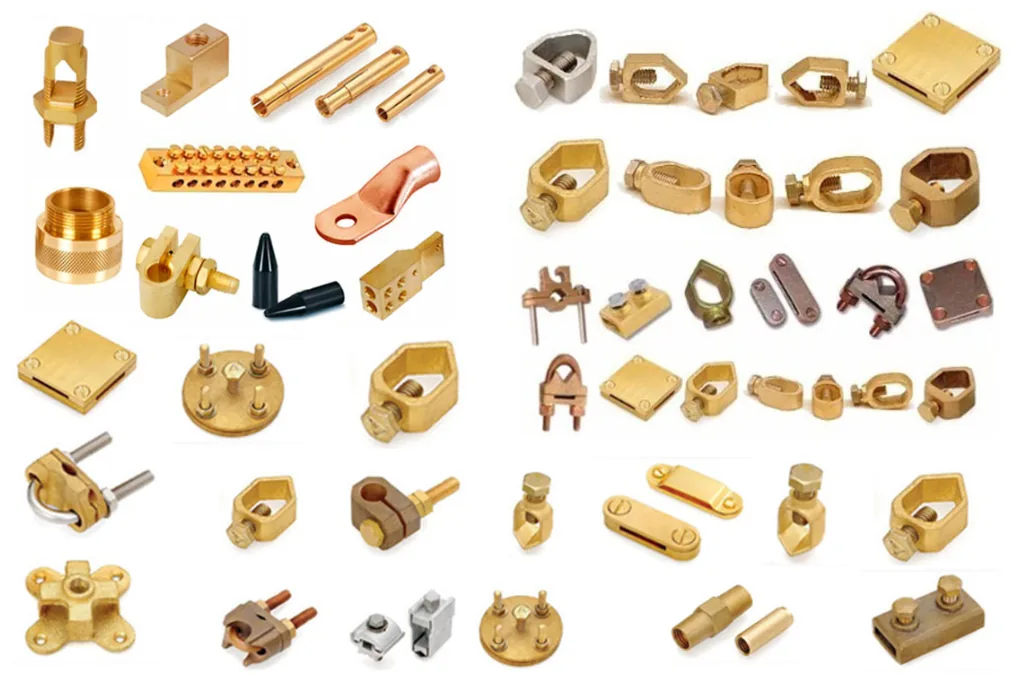
Copper Bonded Earth Rod Manufacturers: A Complete Buyer’s Guide
Every project is surrounded by cost pressure. Earthing systems are usually the first place teams try to cut expenses. On paper, a lower copper-bonded electrode pricing looks like a smart decision. In practice, it becomes a hidden liability.
A poorly manufactured rod doesn’t fail immediately. It degrades slowly through corrosion, coating loss, and rising soil resistivity. By the time failure shows up, it’s not a component issue anymore. It’s equipment damage, downtime, and safety risk. Saving a few rupees per rod can easily translate into thousands lost across a system lifecycle. This is why differentiating between copper bonded earth rod manufacturers and partnering with a reliable one can make differences.
The Clear Difference: Why Most Copper Bonded Earth Rod Manufacturers Fail the Corrosion Test
Not all rods marketed as “copper bonded” are actually bonded at a molecular level. Many are simply copper coated, thin electroplated layers that look identical during inspection but behave very differently underground.
True copper bonding involves molecular fusion between electrolytic grade copper and the steel core. This is where thickness matters. A genuine 250-micron coating doesn’t just improve conductivity, it prevents oxidation under aggressive soil conditions.
Manufacturers that cut corners here rely on visual similarity, not structural integrity. Over time, that difference shows up as peeling, pitting, and increased resistance.
The Technical Core: Understanding Copper Chemical Earthing Electrode Construction
From a procurement viewpoint, the distinction between copper coated and copper bonded rods is non-negotiable. Coated rods depend on surface adhesion. Bonded rods rely on metallurgical integration.
The copper chemical earthing electrode layer in bonded rods acts as a part of the structure, not an external layer. This allows it to withstand mechanical stress during installation and long-term chemical exposure in soil.
In high-resistivity soils or industrial environments with corrosive elements, this difference directly affects system performance. Procurement teams that overlook construction details usually end up dealing with premature failures.
Beyond the Price Tag: How to Evaluate Copper Bonded Earth Rod Suppliers on Technical Merit
Price comparison alone is a weak procurement strategy. Reliable copper bonded earth rod suppliers are evaluated based on testing, consistency, and compliance.
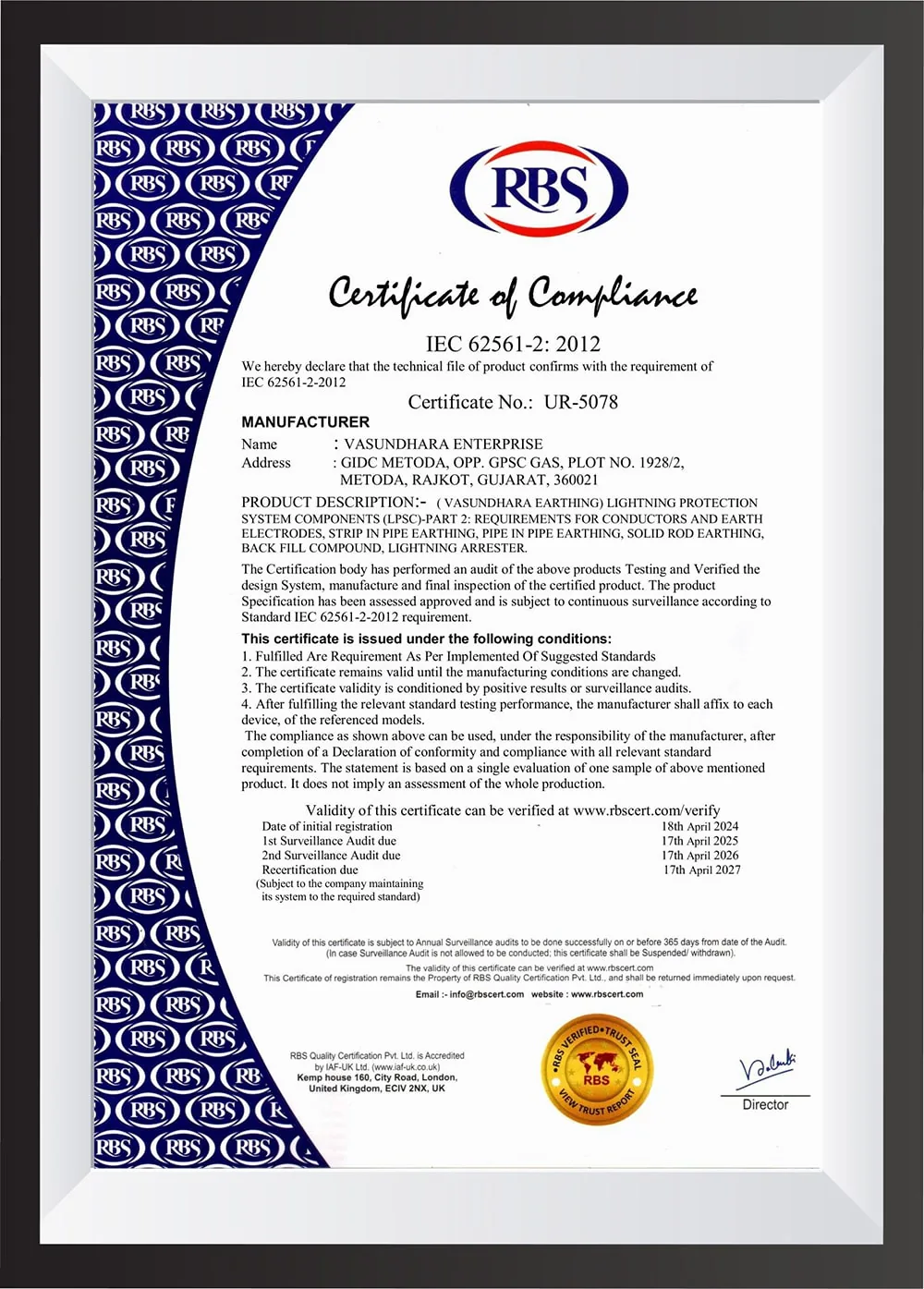
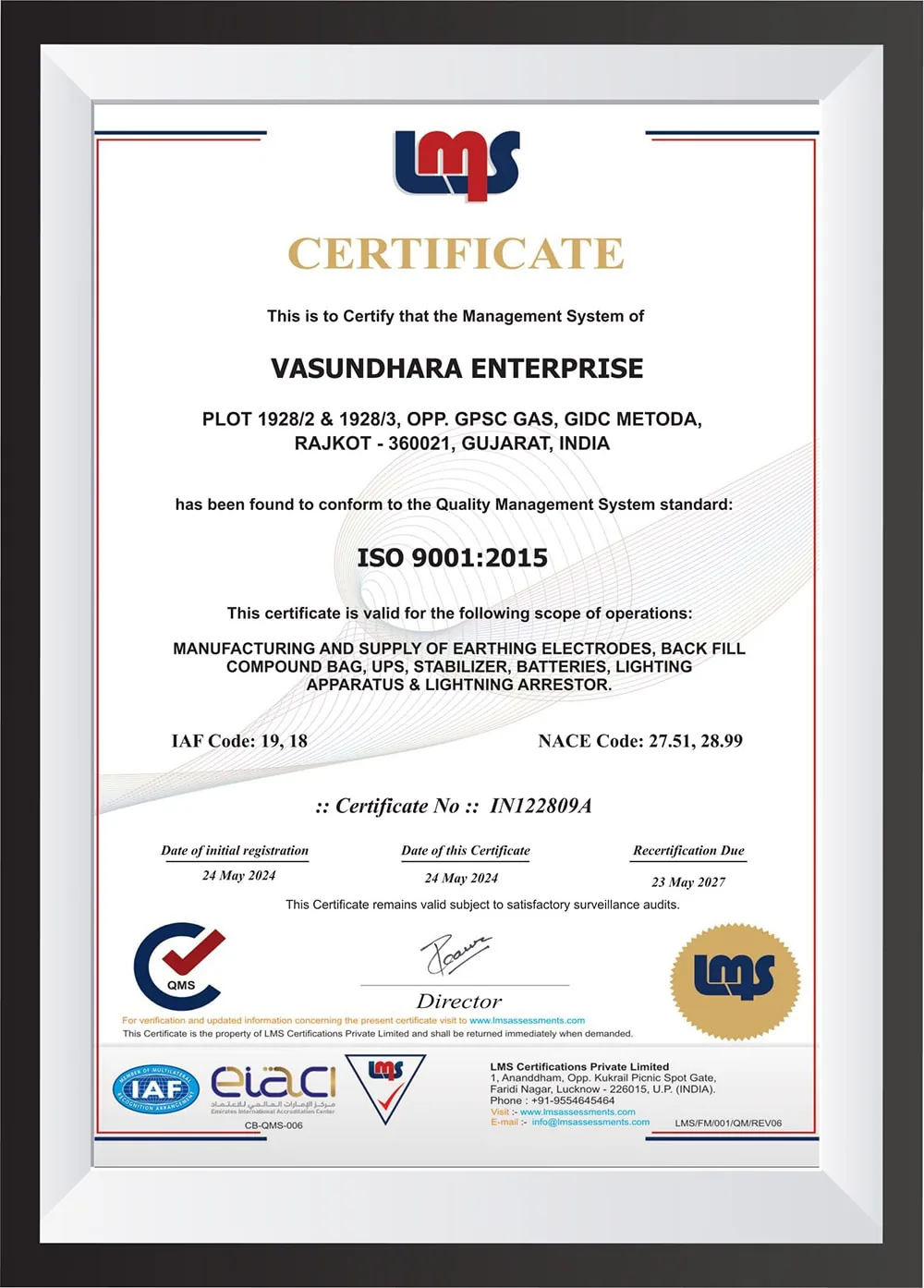
Look for documented validation such as CPRI, ERDA, or equivalent test certifications. These confirm parameters like coating thickness, bonding strength, and conductivity performance. UL 467 compliance is another indicator of manufacturing discipline.
More importantly, ask how consistently these standards are maintained across batches. A single certified sample is not enough. Large-scale projects require uniform performance across every rod delivered.
The Role of Grounding in Lightning Protection Systems
Grounding rods don’t operate in isolation. They form the discharge path for systems connected to copper lightning arresters. When a surge hits, the entire system depends on how effectively that energy moves into the ground.
If the rod fails due to corrosion or poor conductivity, the arrester cannot perform as intended. This is where the role of integration becomes important. High-quality rods paired with properly installed Early Streamer Emission (ESE) or Conventional lightning arrester create a predictable discharge path.
Any weakness in this chain increases the risk of step voltage and equipment failure.
The Global Standard: Navigating the Landscape as a Copper Bonded Earth Rod Exporter
Not every supplier who claims export capability actually builds for it.
In real procurement audits, the difference shows up in consistency. Export-grade rods tend to have uniform coating, cleaner finishes, and fewer deviations between batches. That usually comes from stricter process control, not just better marketing.
A genuine copper bonded earth rod exporter is used to meeting different soil conditions, not just one geography. Their products are tested in varied environments, which forces tighter quality control.
If a supplier cannot explain where their rods are being used globally, that’s usually a sign they are manufacturing for price, not performance.
The Cost Conversation: Earthing Kit Price vs Lifecycle Value
Most cost discussions happen at the wrong stage.
Procurement teams compare earthing kit price line by line, often without considering how the system behaves after installation. The difference doesn’t show in the invoice, it exhibits 12–18 months later when resistance readings start drifting.
Lower-cost earthing rods usually mean thinner bonding or inconsistent coating. That’s where degradation comes into the picture. Once corrosion sets in, maintenance becomes a recurring expense.
On long-term sites, the real question is simple:
Will the system hold its resistance, or will it need correction every season?
The answer determines actual cost, not the initial purchase.
Field Reality: Soil Resistivity and Performance Consistency
Soil reports give averages. Sites don’t. You’ll see variations within the same pit such as dry patches, compact layers, sometimes even construction debris affecting contact. In those conditions, the rod doesn’t just conduct current but compensates for inconsistency.
Inferior rods struggle here. Once the copper layer starts degrading, resistance rises unevenly. That’s when readings become unreliable.
High-quality bonded rods behave differently. They don’t eliminate soil variation, but they handle it better. The contact remains stable longer, which keeps performance predictable.
In grounding, consistency matters more than initial readings.
The Final Checklist: Securing Your Grounding Infrastructure
Most procurement mistakes don’t come from lack of options. They come from assumptions.
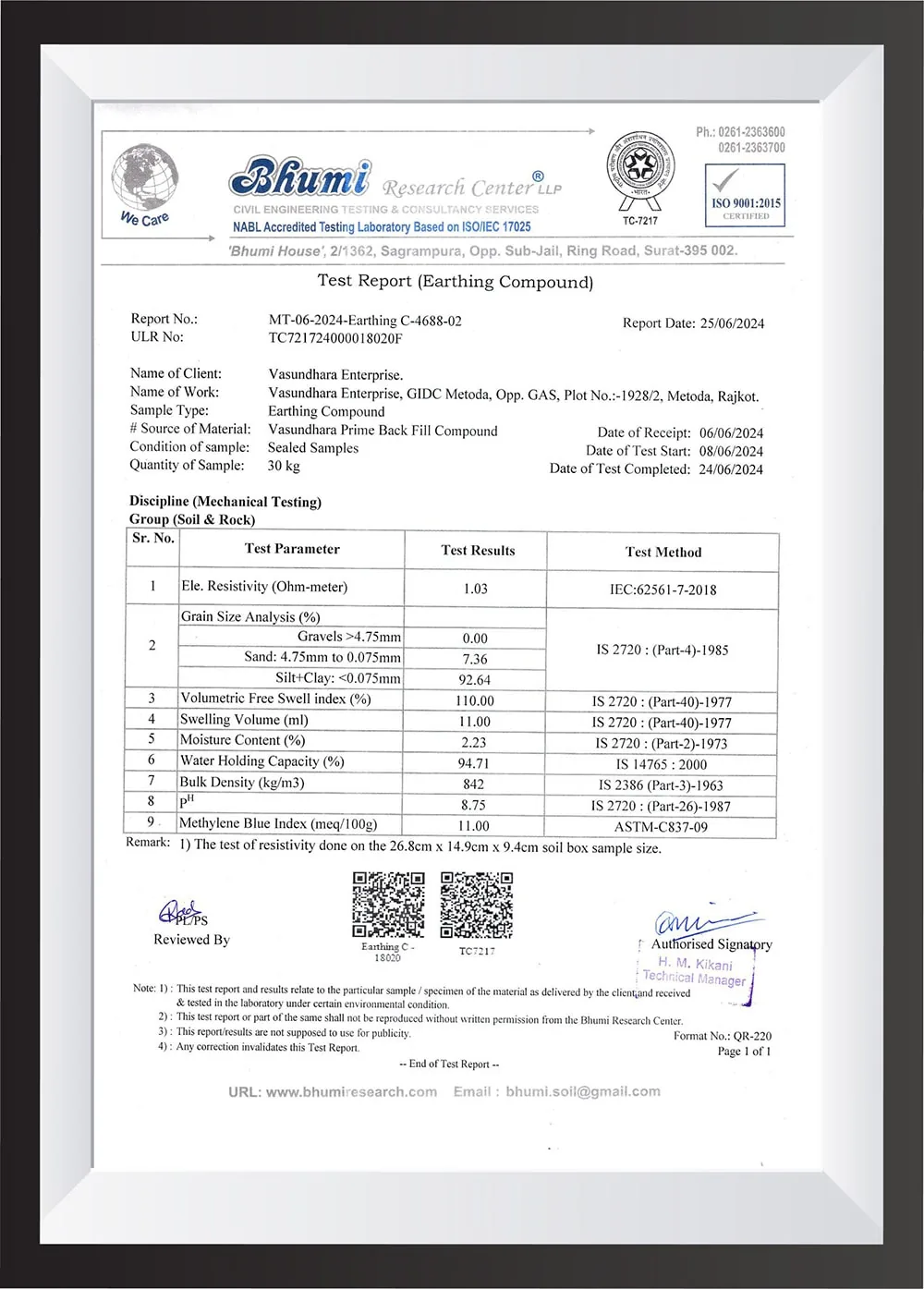
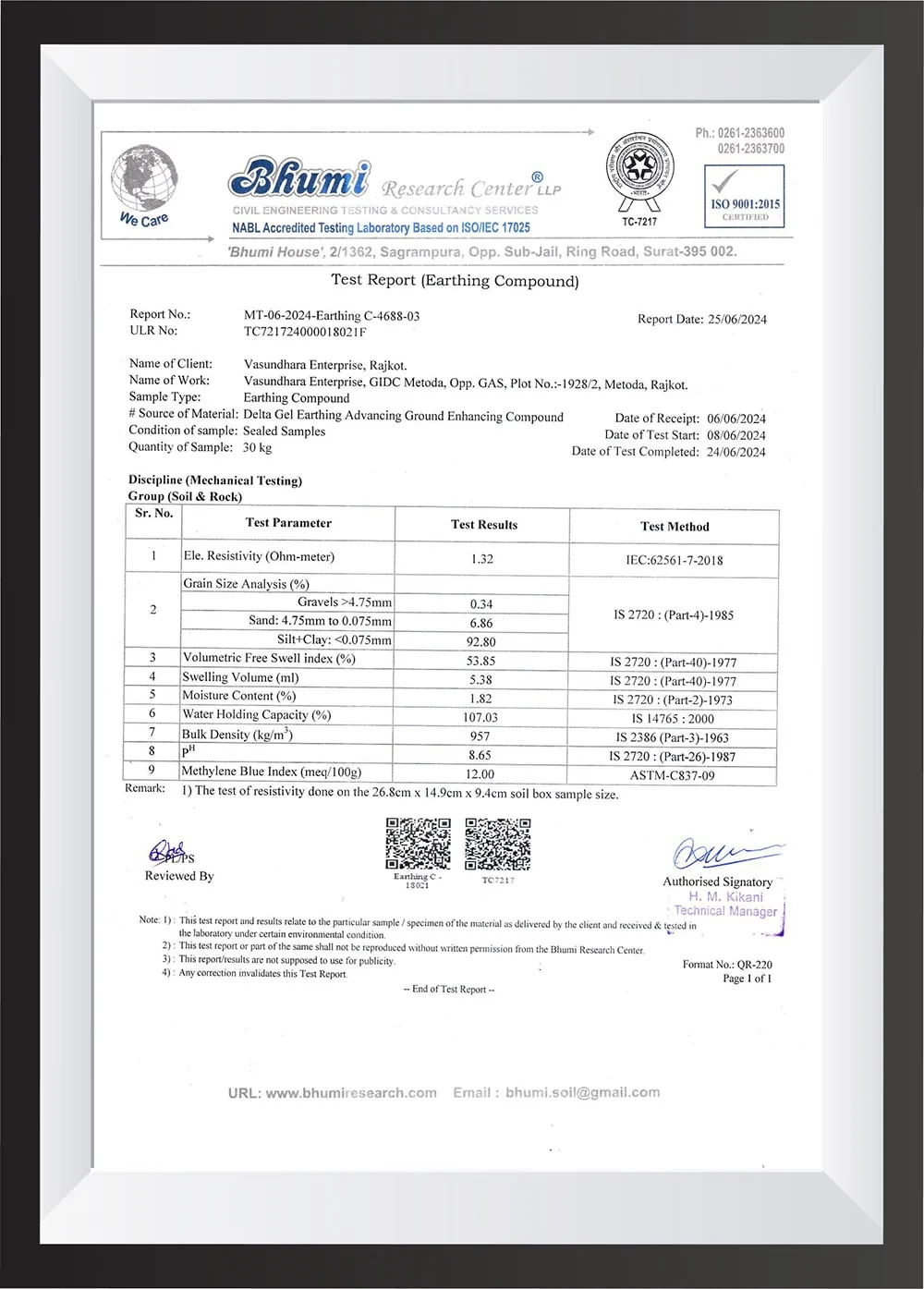
A rod that looks correct isn’t always built correctly. That’s why verification matters. Ask for coating thickness proof, not just claims. Review test reports, but also ask how often testing is done, not just once for certification.
More importantly, speak to the supplier beyond specifications. Do they understand soil conditions, or are they just quoting catalog values?
Before locking in supply, it’s worth stepping back and reviewing the entire grounding approach.
A proper technical audit like the one offered by Vasundhara Earthing often highlights gaps that aren’t visible on paper.