Recent Posts
Chemical Earthing Electrodes Explained: Types, Materials and Specifications
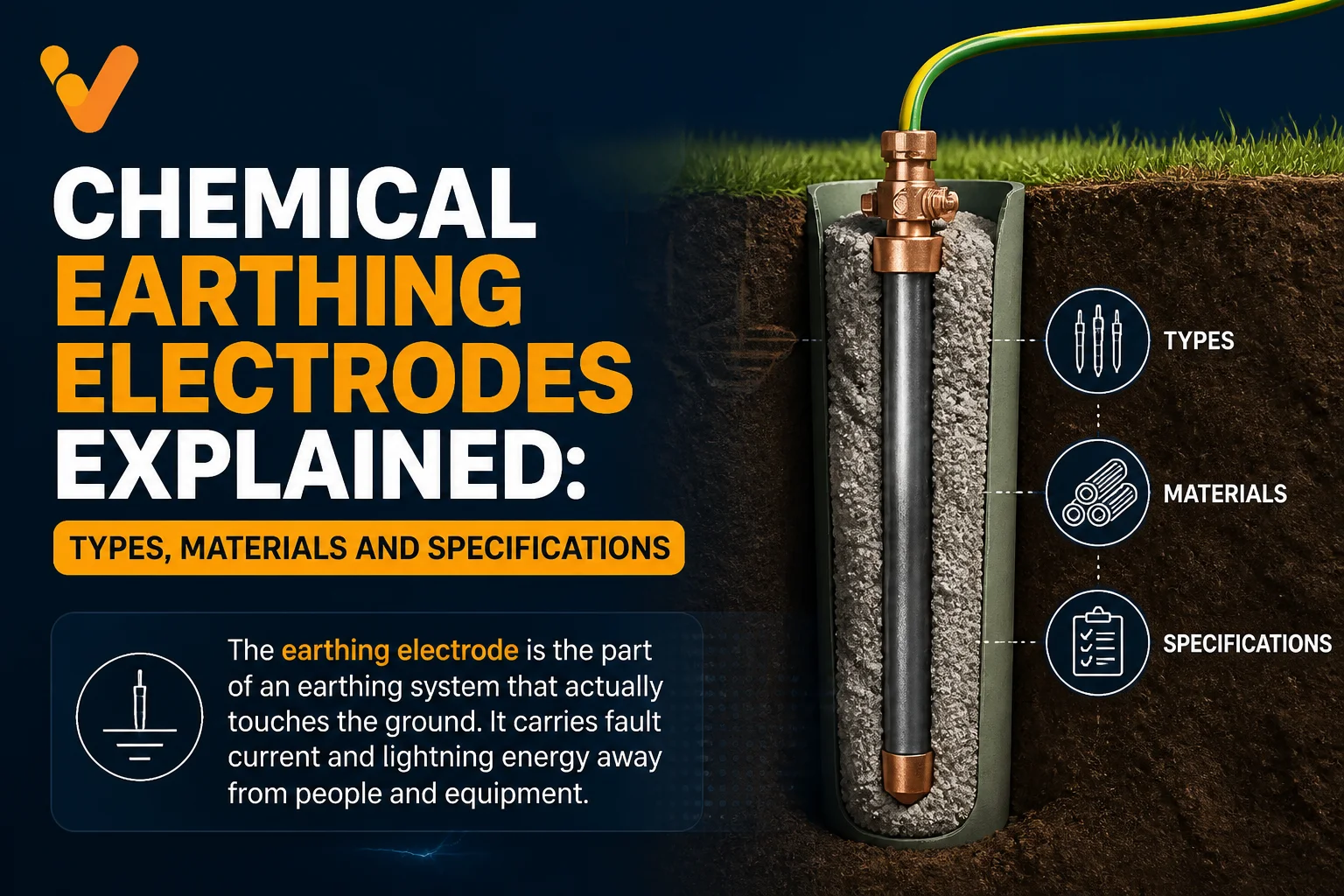
The earthing electrode is the part of an earthing system that actually touches the ground. It carries fault current and lightning energy away from people and equipment. When engineers compare chemical earthing electrode manufacturers, they are really comparing how well each electrode will conduct, resist corrosion and keep resistance low over its lifetime.
This guide explains how a chemical earthing electrode works, the main materials and sizes available, how to read a specification sheet and how to match an electrode to your soil and application.
How a Chemical Earthing Electrode Works
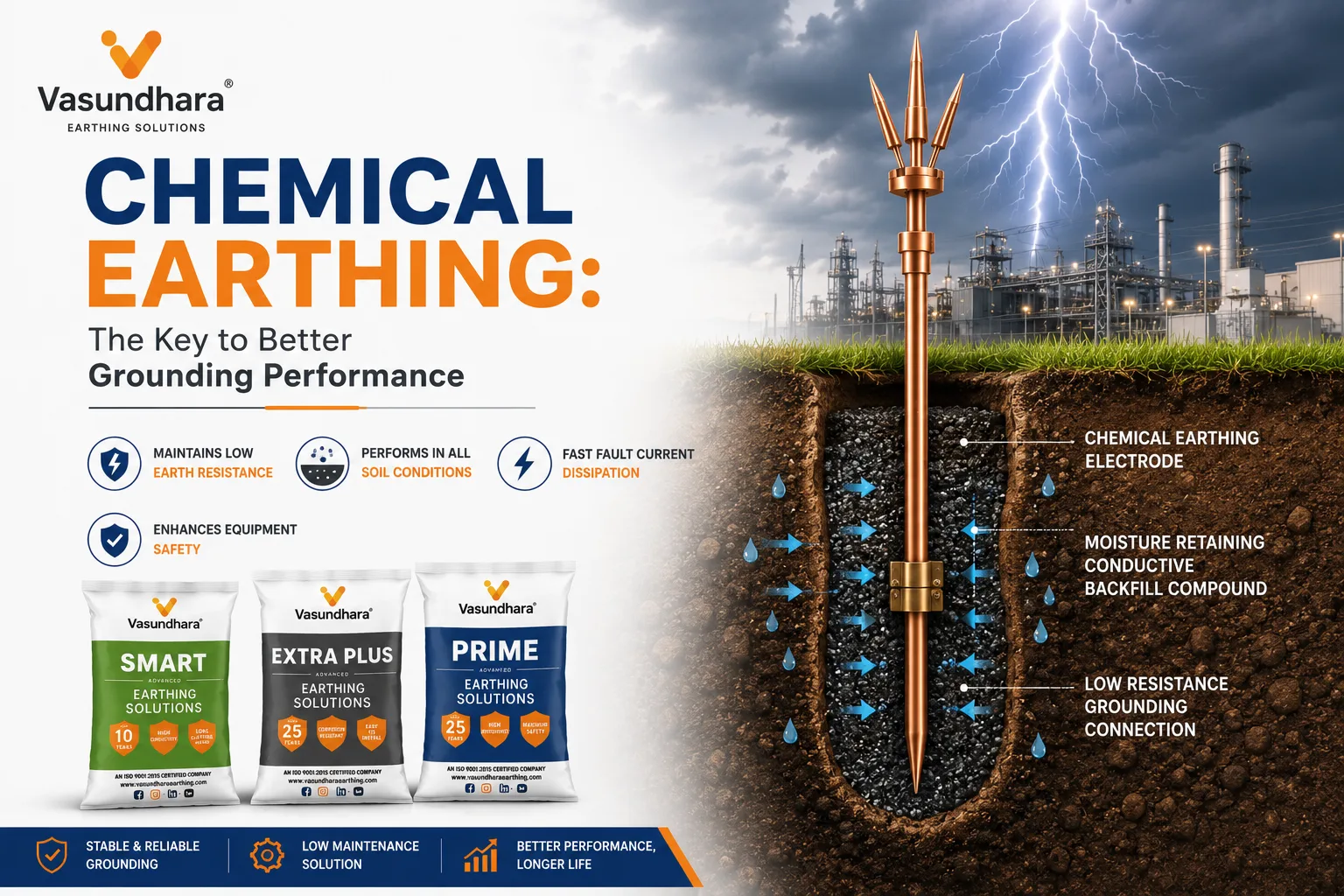
A conventional electrode depends almost entirely on the soil around it. If the soil is dry, rocky or sandy, its resistivity is high and fault current struggles to dissipate. A chemical earthing electrode solves this by surrounding the rod or pipe with a conductive backfill compound. The compound fills air gaps, increases the effective contact area with the soil and holds moisture, so resistance stays low even in dry seasons.
For the science behind this, read how chemical earthing improves grounding performance.
Types of Chemical Earthing Electrodes by Material
| Material | Strengths | Considerations | Typical use |
|---|---|---|---|
| Solid copper | Highest conductivity, excellent corrosion resistance | Highest cost | Substations, data centres, critical equipment |
| Copper-bonded steel | Copper conductivity with steel strength, good value | Coating quality and thickness must be verified | Industrial plants, commercial buildings, solar |
| Galvanized iron (GI) | Most economical, zinc coating resists rust | Shorter life in highly corrosive soil | Homes, small buildings, light industry |
| Stainless steel | Strong corrosion resistance | Lower conductivity than copper | Specialised corrosive environments |
Copper-bonded electrodes are especially popular. To learn how to evaluate them, see our guide on choosing copper bonded earth rod manufacturers.
Rod vs Pipe Electrodes
Electrodes come in two main forms. A chemical earthing rod is solid and can often be driven into softer ground. An earthing pipe is hollow, and in many chemical designs the compound is placed inside and around it. Pipes offer a larger surface area, while rods are easier to extend by coupling sections together for deeper installation. Our article on gel earthing electrode vs copper plate earthing compares electrodes with the older plate method.
Key Specifications to Check
- Diameter: Commonly 25 to 50 mm. Larger diameters add surface area and mechanical strength.
- Length: Commonly 2 to 3 metres. Longer electrodes reach deeper, moister soil layers with lower resistivity.
- Wall thickness (pipes): Typically 2.5 to 6 mm. Thicker walls resist corrosion and damage for longer.
- Coating: For copper-bonded electrodes, ask for the copper layer thickness. For GI, ask about the zinc coating.
- Design resistance: Vasundhara electrodes are designed for resistance below 1 ohm in suitable conditions. Real results depend on the soil.
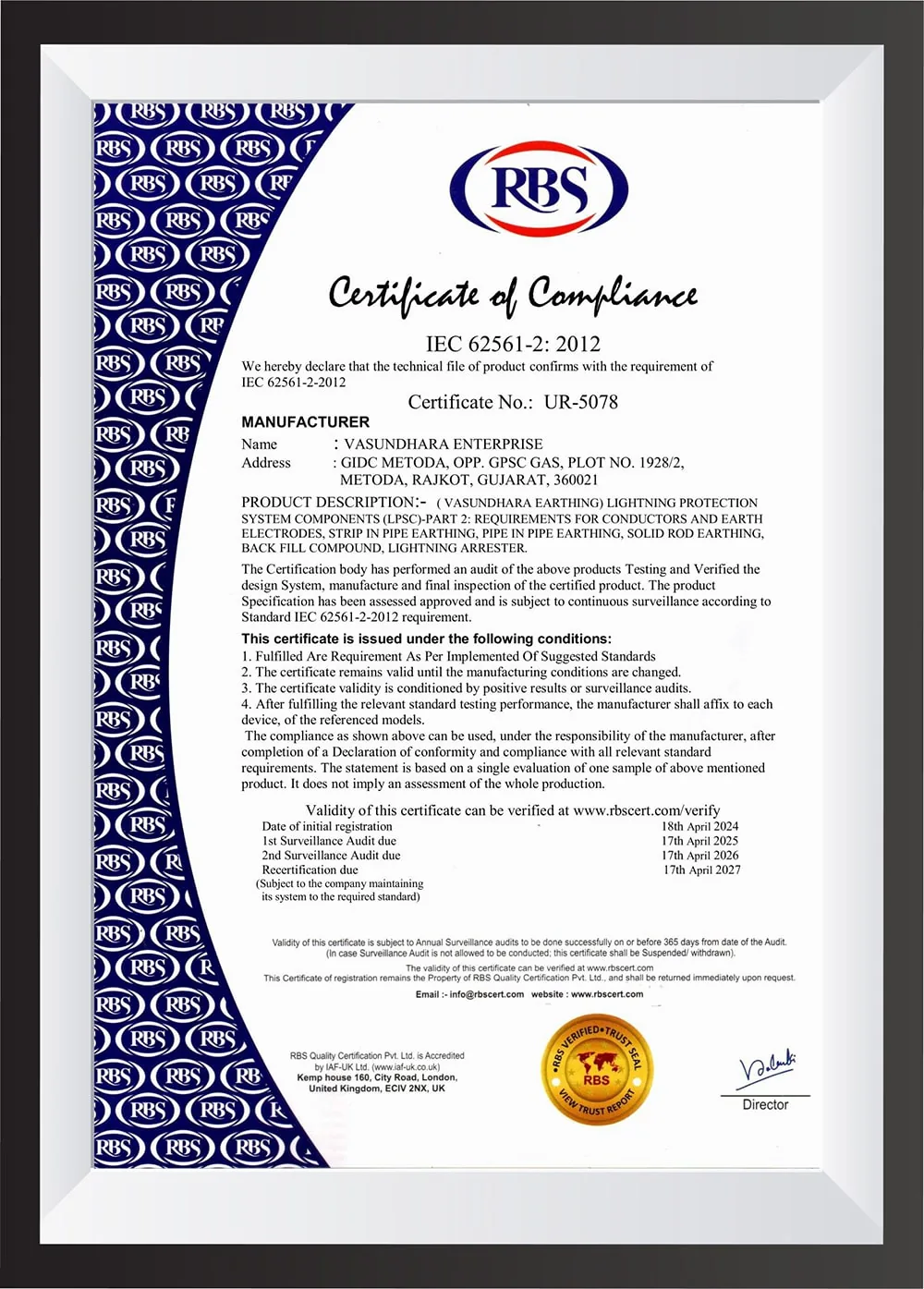
- Standards: Check compliance with IS 3043 and relevant IEC or BS standards. IEC 62561-2 specifically covers earth electrodes.
Matching the Electrode to Your Site
Start with a soil resistivity test. In low-resistivity, moist soil, a single GI or copper-bonded electrode may meet your target. In rocky, sandy or dry soil, choose a longer electrode, a copper or copper-bonded material, more compound, or several electrodes in parallel. Coastal and chemical-industry sites need extra attention to corrosion. Our guide to types of earthing systems for industries explains how applications differ.
Vasundhara's Electrode Range
We are among the leading chemical earthing electrode manufacturers in India, producing electrodes at our factory in Metoda GIDC, Rajkot. Our pipe electrodes come in five series:
- HD Series: steel bonded with copper for strength and corrosion resistance
- Prime Series: an affordable option for sites with frequent voltage variation
- Pro Series: GI, HD GI and copper options with backfill for lightning-prone tall buildings
- Smart Series: maintenance-free and competitively priced for industrial use
- Echo Series: GI gel earthing electrodes for small houses and buildings
Every electrode is inspected before dispatch. Read about the safety rules a chemical earthing electrode manufacturer should follow, and see our technical page for further data.
Installation Basics
A typical installation involves boring or digging the pit, placing the electrode, filling around it with compound mixed as instructed, backfilling with soil, connecting the earthing conductor and fitting an earth pit chamber. Always measure resistance after installation. Follow our installation steps for detailed guidance.
Related Reading
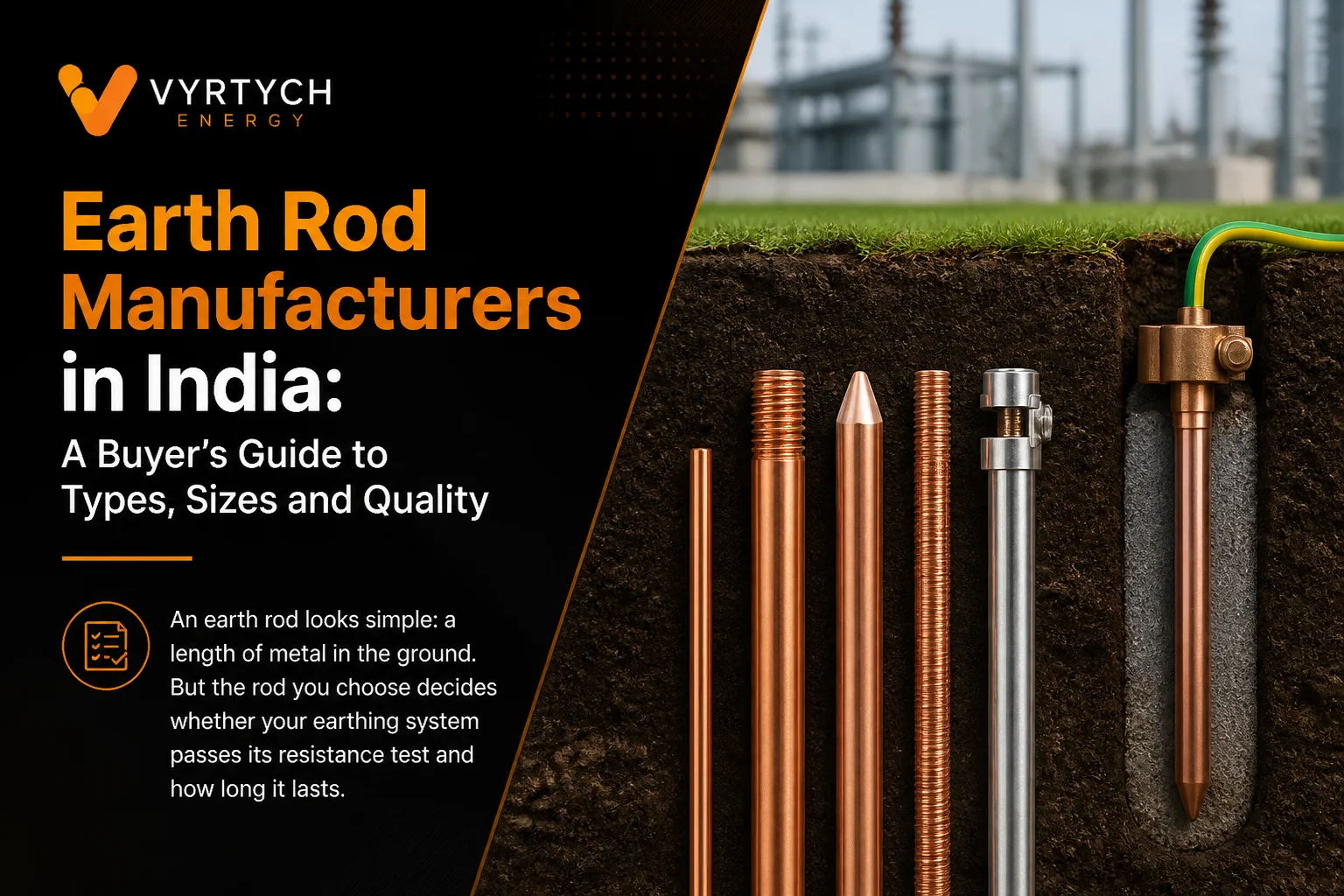
- Earth rod manufacturers in India: types, sizes and buying tips
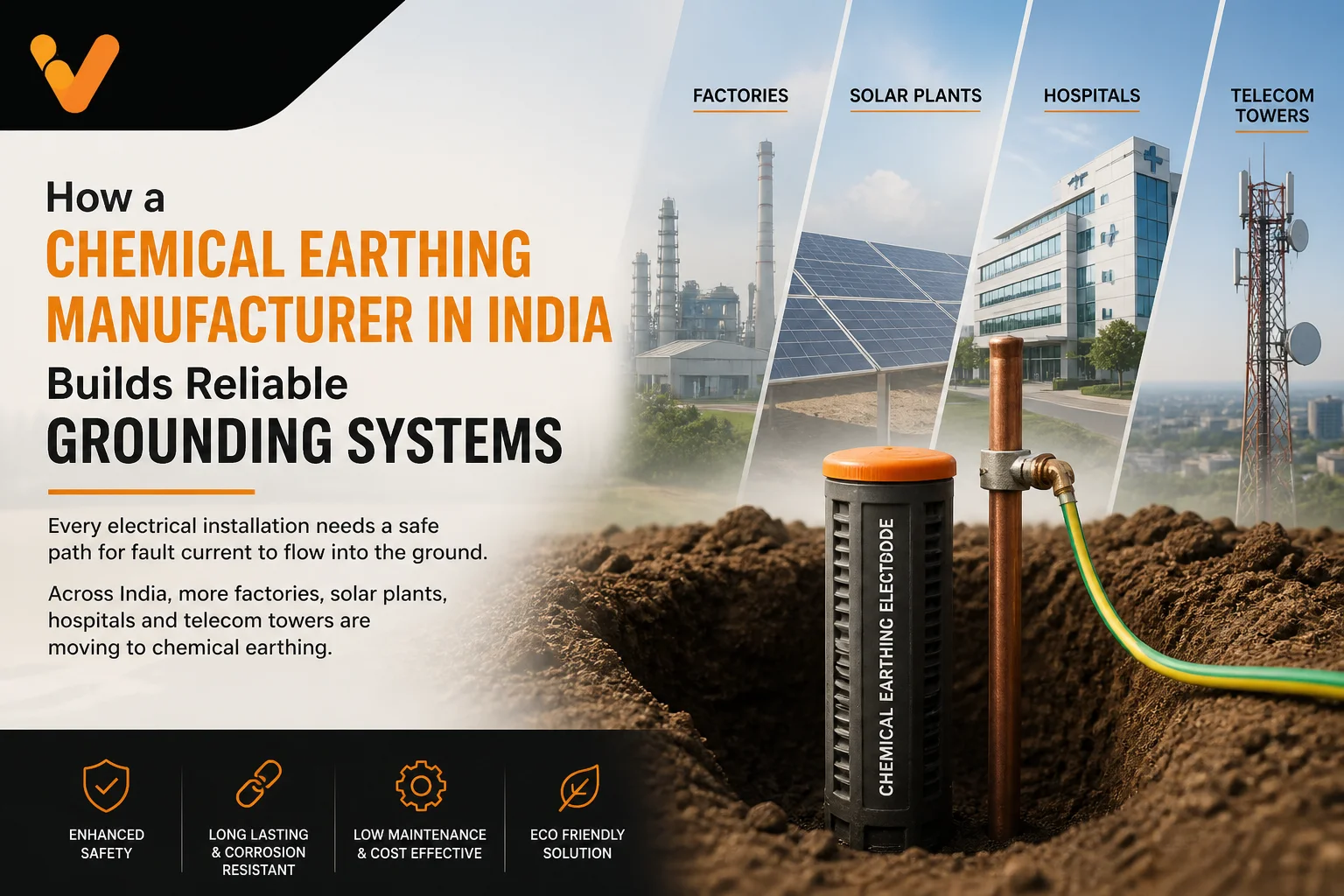
- How a chemical earthing manufacturer in India builds reliable systems
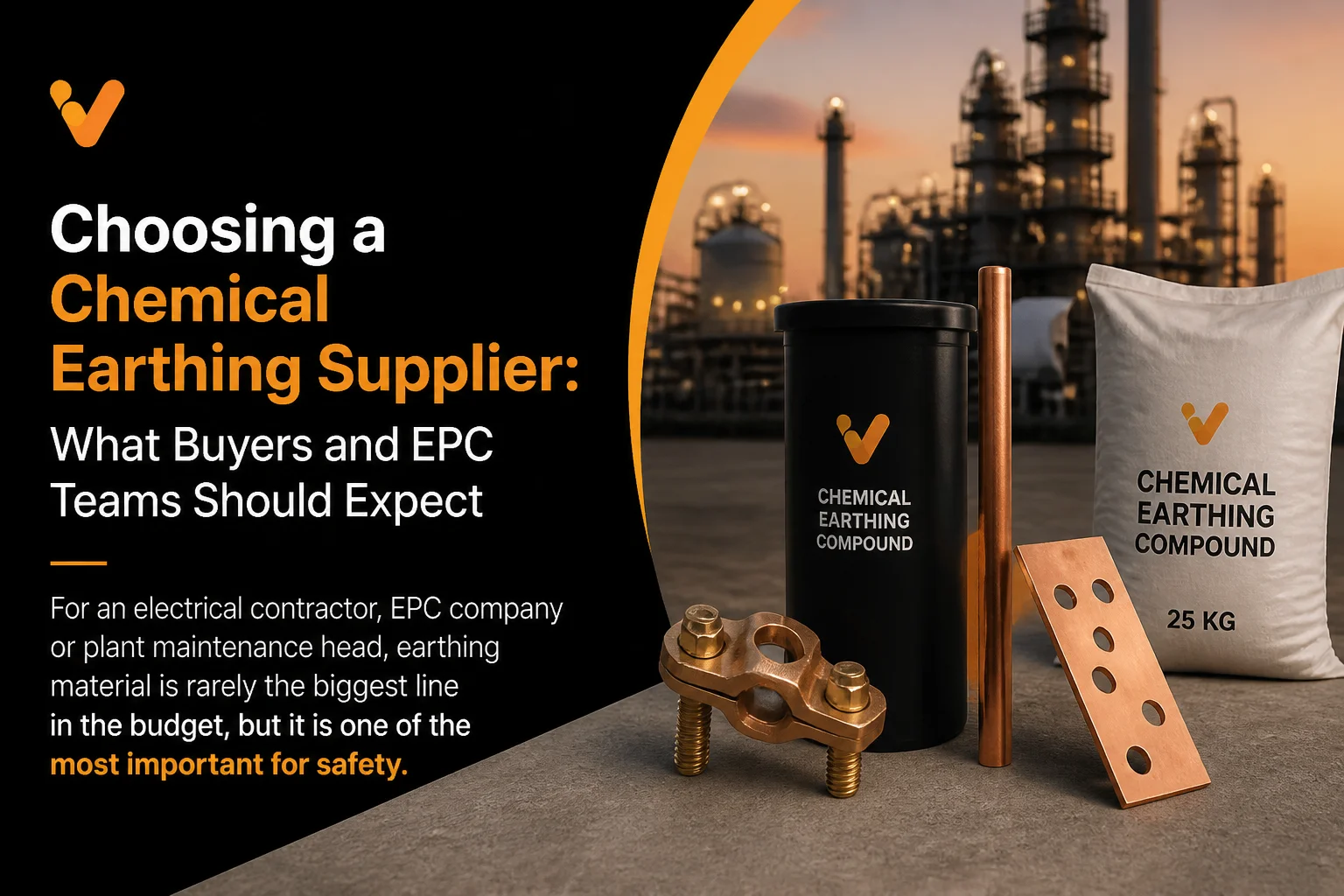
- What to expect from a chemical earthing supplier
Frequently Asked Questions
What is a chemical earthing electrode?
A chemical earthing electrode is a rod or pipe, usually made of copper, copper-bonded steel or galvanized iron, installed in the ground and surrounded by a conductive backfill compound. The compound lowers contact resistance and holds moisture so the earth connection stays stable.
What sizes do chemical earthing electrodes come in?
Common diameters range from 25 to 50 mm and common lengths from 2 to 3 metres. Pipe electrodes typically have wall thicknesses between 2.5 and 6 mm. Custom sizes can be made for special projects.
Which electrode material is best: copper, copper-bonded or GI?
Solid copper offers the highest conductivity and corrosion resistance but costs the most. Copper-bonded steel combines copper's conductivity with steel's strength at a lower cost. GI is the most economical and suits homes and light commercial buildings with moderate soil conditions.
How long does a chemical earthing electrode last?
Service life depends on the material, coating thickness and soil corrosiveness. Quality copper and copper-bonded electrodes with proper backfill compound can last many years with minimal maintenance, while GI electrodes last less in highly corrosive soil.
Does a chemical earthing electrode need watering?
No regular watering is needed. The backfill compound absorbs and retains moisture from the surrounding soil, which is one of the main advantages over conventional salt and charcoal earthing. Periodic resistance testing through the earth pit chamber is still recommended.
Get Help Choosing the Right Electrode
Share your soil test results and target resistance, and our team will recommend the right electrode type, size and quantity. Enquire now or call +91 90330 04276.