Recent Posts
Types of Earthing Systems: A Complete Guide for Industries | Vasundhara
One question comes up on almost every project: Which earthing system should we use?
There isn't a single answer. A solution that works well for one facility may create unnecessary cost or maintenance in another. The decision usually comes down to practical things such as site conditions, available space, electrical load, and the level of protection the installation demands.
This guide looks at the major types of earthing systems, where each one is commonly used, and what should influence your decision before the work begins.
Why Choosing the Right Earthing System is Important
It's easy to assume that if one of the electrical earthing systems meets the basic requirement, the job is done. In practice, that's rarely the case. The same system may perform differently depending on soil conditions, fault levels, moisture, and the nature of the facility itself. A solution that works perfectly for a warehouse may not be the right fit for a manufacturing plant or a data centre.
The best choice from the earthing system types usually isn't the most expensive system or the one used on the previous project. It comes down to how the site will actually perform once it's energized. That's why engineers weigh several practical factors before deciding which earthing arrangement belongs to a particular facility.
Factors That Influence Earthing System Selection
There's no checklist that works for every project. The same industrial grounding system can perform very differently when site conditions change. That's why engineers spend time evaluating the installation before deciding on an earthing solution. A few practical considerations usually shape the final decision.
Soil Conditions
Not every soil offers the same conductivity. Sandy, rocky, or dry ground often requires a different approach than moist or clay-rich soil.
Nature of the Facility
A manufacturing plant, hospital, and commercial complex don't face the same electrical risks. The earthing arrangement should reflect how the facility operates.
Fault Current Levels
Not every installation has to deal with the same fault current. A facility handling heavy electrical loads often calls for a different earthing arrangement than a small commercial building.
Long-Term Maintenance
The installation doesn't end when the project is handed over. Some electrical grounding solutions are easier to inspect, test, and maintain over the years, making them a better fit for sites with limited maintenance resources.
Common Types of Earthing Systems Used in Industries
Walk through a few industrial sites and you'll quickly notice that there's no single earthing for industries method used everywhere. The choice usually reflects the site's conditions, available space, maintenance approach, and the demands of the electrical installation. While the objective stays the same, different Industrial earthing systems types solve different practical challenges.
1. Plate Earthing
Plate earthing has been around for decades and is still used where deep excavation is possible. It offers reliable performance, although many modern projects now consider alternatives that require less civil work.
2. Pipe Earthing
If you visit factories, commercial buildings, or residential developments, pipe earthing is probably the method you'll come across most often. Its popularity comes from a simple balance of performance, installation cost, and maintenance.
3. Rod Earthing
Rocky ground and restricted spaces often leave little room for conventional excavation. In those situations, rod earthing provides a practical way to establish an effective earth connection without extensive groundwork.
4. Strip Earthing
When equipment is spread across a large site, relying on a single earthing point isn't practical. Strip earthing helps create a continuous grounding path, which is why it's regularly seen in substations, process plants, and other large industrial facilities.
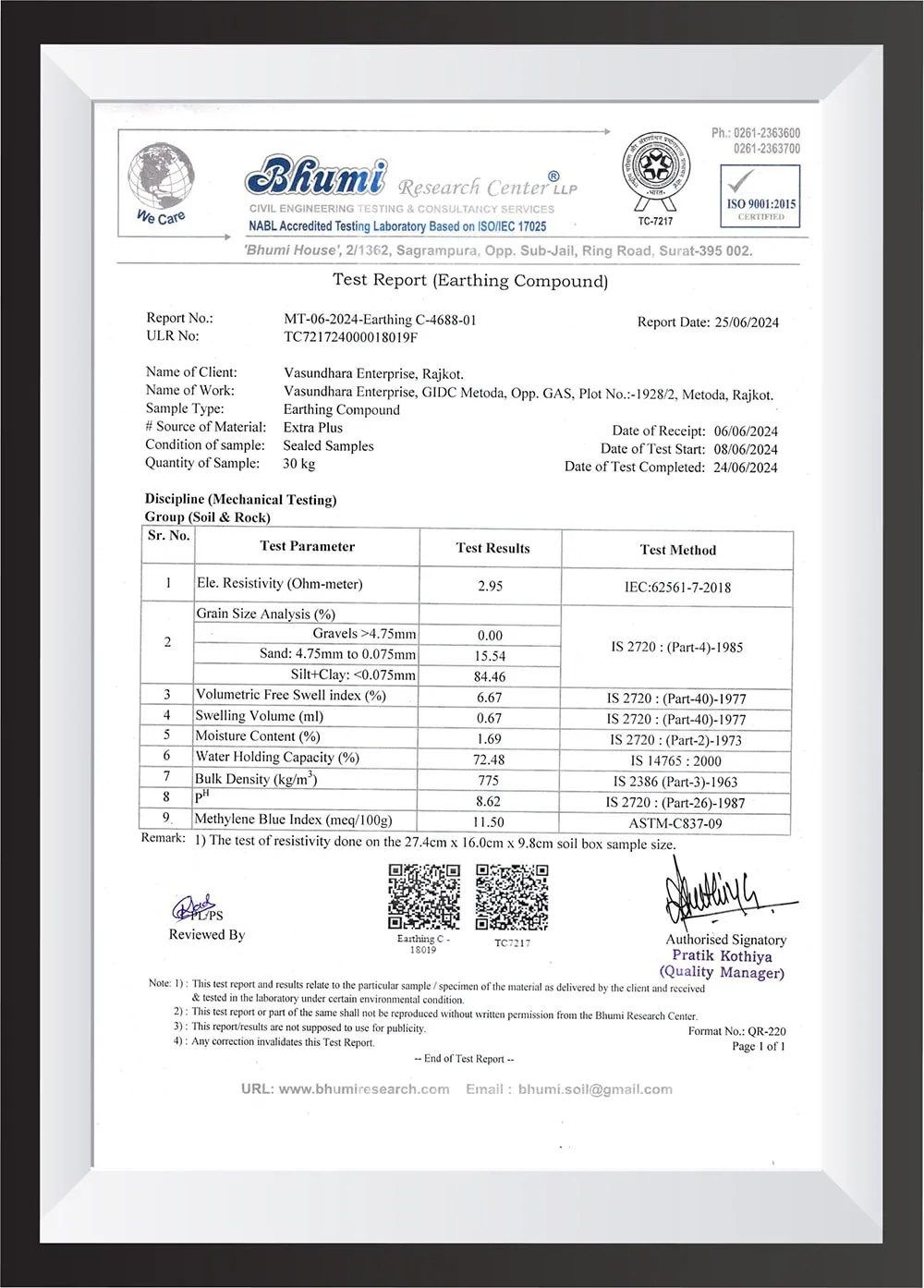
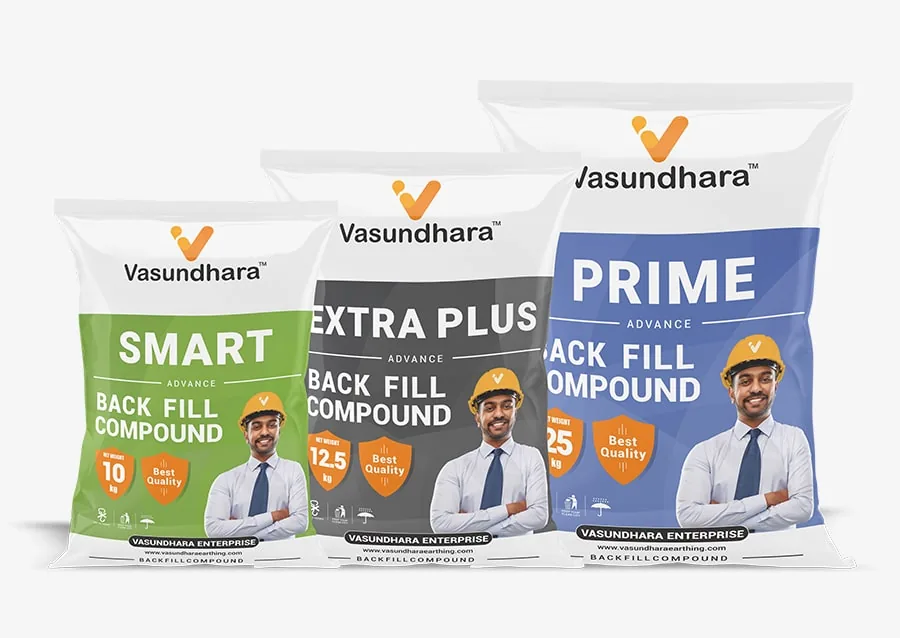
5. Chemical Earthing
Some sites simply don't cooperate. Dry, rocky, or high-resistance soil can make conventional methods difficult to rely on. In those situations, chemical earthing is often chosen to achieve more stable earth resistance without repeatedly modifying the installation.
Which Earthing System Makes Sense for Your Project?
By this stage, the question usually changes. It's no longer "What are the different types?" It's "Which one should we actually use?"
The answer depends less on the product itself and more on the project. Two facilities with similar electrical loads can end up using different industrial grounding systems because their soil conditions, layouts, or maintenance priorities aren't the same. That's why experienced consultants rarely recommend an earthing arrangement after looking at a drawing alone.
Manufacturing Facilities
Where heavy equipment runs around the clock, reliability matters just as much as compliance. The selected system should continue performing even under demanding operating conditions.
Commercial Developments
Commercial projects often have tighter budgets and fixed completion timelines. The earthing system has to be dependable, but it also needs to fit the realities of construction, future maintenance, and day-to-day operation.
Critical Infrastructure
When the facility can't afford unexpected downtime, earthing becomes part of the reliability strategy, not just another item on the electrical drawing. That's why these projects are usually planned with a much longer view.
Start With the Site
It's tempting to begin by comparing products, but that's rarely how good decisions are made. The site itself usually provides the answer. Once the electrical requirements, ground conditions, and maintenance expectations are clear, narrowing down the right solution becomes far more straightforward.
Which Earthing System Makes Sense for Your Project?
After looking at the available options, most people end up with the same question: Which one should we go with? It is a fair question but there isn't a fixed answer. Two projects can look almost identical on paper and still end up using different industrial earthing systems. Site conditions have a habit of changing the conversation.
Manufacturing Facilities
Heavy machinery, continuous operation, and higher fault levels usually call for a more robust approach.
Commercial Developments
Here, the decision is often a balancing act. Cost matters, but so do maintenance and long-term reliability.
Critical Infrastructure
For hospitals, data centres, and similar facilities, the discussion quickly shifts from cost to continuity.
Start With the Site
Good decisions rarely begin with a catalogue. They begin with understanding the site, then matching the system to it.
Every site brings a different set of challenges, which is why the right earthing system is rarely a one-size-fits-all decision. If you'd like a second opinion before finalising your project, the team at Vasundhara Earthing is always happy to discuss the options.
FAQs
Q.1. Does concrete-encased earthing (Ufer ground) work well in arid regions?
A: No. Ufer grounds rely on the moisture absorbed by concrete from the surrounding soil. In arid or desert regions, the soil dries out completely, causing contact resistance to spike and rendering the system ineffective.
Q.2. Why is using a single earthing design effective for two identical manufacturing plants?
A: Soil resistivity changes extremely by location. A design that achieves low resistance in moist clay will completely fail in rocky or dry sandy soil.
Q.3. How do site conditions dictate the choice between chemical grid and conventional earthing?
A: High-resistivity or rocky soil lacks the natural moisture to dissipate faults quickly. In these environments, chemical earthing (using moisture-retaining compounds) is mandatory to artificially lower grid resistance.